Best Snorkel Set for Travel

A practical breakdown of what actually works — and what doesn’t — when you’re packing gear for a trip.

Tested & Reviewed
TSA-Friendly Picks
Adults, Kids & Beginners
Updated 2026
How We Evaluated These Sets

We worked through 25+ snorkel sets across multiple categories, cross-referencing weight specs, packability, snorkel type, and seal quality against over 1,000 real traveler reviews. Every recommendation here is chosen because it solves a specific, practical problem — not because it looks good on a product page. We weight portability, fit consistency, and anti-fog performance above all else. Those are the things that actually separate a good experience from a frustrating one.

Most people end up with the wrong snorkel gear for travel. Not because they didn’t research it, but because most guides are written around performance specs that don’t matter much when you’re trying to fit everything into a carry-on and snorkel comfortably for an hour in warm, clear water.

The problems that come up most often are predictable: fins that won’t fit in a suitcase, masks that fog up constantly, snorkels that let water in, and gear that’s just heavier than it needs to be. These aren’t rare complaints — they’re the most common reasons people have a bad time in the water, even at beautiful Snorkeling Destinations.

This guide focuses specifically on travel. That means compact designs, lightweight materials, reliable Dry Snorkels, and masks with consistent seals. Not the highest-performance free-diving fins or professional-grade equipment — just gear that actually travels well and works reliably when you get there.

Here’s what’s worth your attention.

Quick Picks by Category

Tap any product name to jump to the full review.

Category Product Why It Stands Out Price
Best Overall Travel Set Cressi Palau Set Compact fins, true dry snorkel, reliable seal — the most complete travel package Check Price
Best Budget Pick Seavenger Aviator Set Lightweight and beginner-friendly without breaking the budget Check Price
Best Premium Mask Atomic Aquatics Venom Exceptional anti-fog coating and optical clarity — buy once, use for years Check Price
Premium Alternative TUSA Freedom Ceos Superior skirt seal design, especially for harder-to-fit face shapes Check Price
Best for Beginners U.S. Divers Cozumel Set Simple fit, easy breathing, no steep learning curve Check Price
Best for Kids Cressi Kids Palau Set Properly sized for smaller faces, adjustable fins, solid seal Check Price
Ultra-Light Travel Setup Cressi F1 + Supernova Dry Finless option for backpackers — fits easily in a day bag Check Price
Casual Full-Face Option Greatever Foldable Foldable, easy to breathe through — better than most in this category Check Price

What Makes a Snorkel Set Actually Travel-Friendly?

Before getting into specific products, it’s worth being clear about what “travel-friendly” actually means — because it’s not just about being small. Plenty of cheap sets are small and still bad. Here’s what actually matters:

  • Fin length: Full-length freediving fins are the biggest space problem. Short-blade or split fins (under 18″) fold or lay flat in most large suitcases without overhang. This one factor eliminates roughly half the sets available.
  • Total weight under 3 lbs: It sounds generous, but many sets with full-size fins push past this easily. At 2–2.5 lbs, a set takes meaningful weight away from baggage limits without sacrificing usability.
  • Dry snorkel vs. splash guard: A Dry Snorkel has a mechanism that seals when submerged. A splash guard just has a protective cover. For most travellers doing recreational snorkeling in choppy conditions, a dry snorkel is worth the small price difference.
  • Silicone mask skirt: PVC skirts are cheaper, stiffer, and far more likely to leak over time. Soft silicone conforms to the face properly and holds its shape across temperature changes — critical when gear goes from a hot suitcase to cool water.
  • Mesh carry bag: This is minor but matters for packing. A Mesh Bag that allows air to circulate prevents mold and odor from damp gear.

If a set checks all five of these, it’s worth considering. If it misses two or more, it’s almost always a compromise you’ll regret in the water.


Detailed Reviews: The Best Travel Snorkel Sets

Best Overall

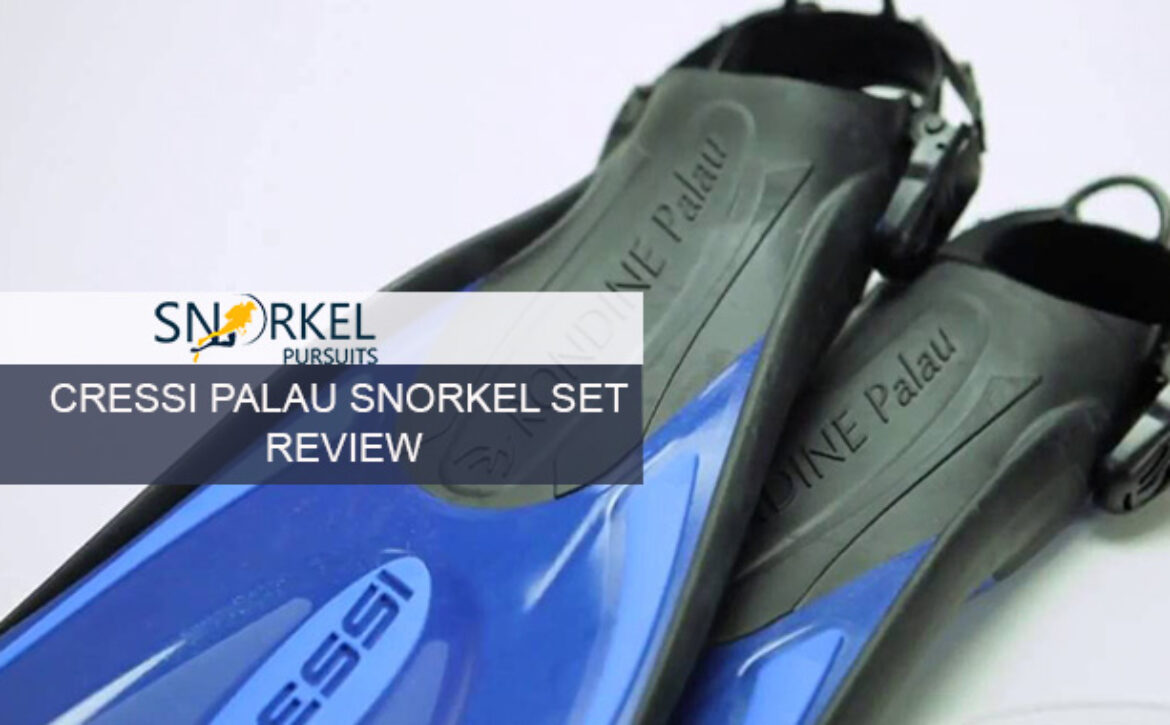
Cressi Palau Snorkel Set

Weight: ~2.5–3 lbs (full set)
Snorkel Type: True dry snorkel
Fin Style: Short open-heel blade
Skill Level: All levels

The Cressi Palau set has been a consistent recommendation for good reason — it’s not trying to be the highest-performance kit on the market. It’s trying to be the most practical complete package, and it succeeds at that more reliably than most of the competition.

The fins are the key element here. Most complete travel sets either include fins that are too long (won’t fit a suitcase without modification), or they skip fins entirely and leave you renting locally. The Palau’s short-blade design fits in a checked bag without creative packing, and they provide enough propulsion for calm snorkeling without exhausting your legs. If you’re not freediving or swimming in strong currents, these fins are exactly right.

The mask uses a soft silicone skirt that seals well across a reasonably wide range of face shapes. It’s not infallible — people with very narrow faces or prominent facial hair may find the seal inconsistent — but for most adults, it works. The wide lens gives good peripheral visibility, and the purge valve at the bottom makes clearing water simple.

The dry snorkel includes a float mechanism at the top that physically seals the tube when submerged. This matters in choppier water where a splash guard snorkel will let enough water in to interrupt your breathing rhythm repeatedly. For anyone snorkeling in open ocean conditions rather than flat lagoons, this is the right choice.

Who it’s not for

If you have a face shape that’s difficult to fit, this mask may not seal well enough. And if you plan to use the fins in strong currents, a longer-blade fin would serve you better. Consider reading our guide on Snorkel Masks for Small Faces or Snorkel Masks for Beards.

Strengths

  • Complete set — no missing pieces
  • Fins fit standard checked luggage
  • True dry snorkel performs in chop
  • Reliable silicone seal
  • Consistent quality across units

Limitations

  • Seal may not work for all face shapes
  • Fins still bulky for carry-on only
  • Not built for strong currents
Best Budget

Seavenger Aviator Snorkel Set

Weight: ~2.2 lbs
Snorkel Type: Splash guard
Fin Style: Short open-heel blade
Skill Level: Beginner to intermediate

If you’re snorkeling a few times a year in relatively calm conditions and don’t want to spend significantly on gear you may rarely use, the Seavenger Aviator is a reasonable entry point. It’s lighter than most sets in this category, and the overall build quality is better than you’d expect given the price.

The mask has a tempered glass lens and a softer-than-average silicone skirt for its price range. Most people find it seals well enough for recreational snorkeling. The dry-top design on the snorkel is technically a splash guard rather than a true dry snorkel — it reduces water entry but won’t fully seal if you dive below the surface or encounter significant chop. In calm, clear water, that’s rarely a problem. In rougher conditions, it shows its limitations.

The fins are genuinely compact, which makes this one of the easier full sets to travel with even in a carry-on, depending on how you pack. They’re a little stiffer than you’d want for long sessions, but for casual 45-minute snorkeling excursions, they work fine.

The Honest Assessment

For two or three snorkeling trips a year in fair conditions, this does the job. If you’re snorkeling frequently, in varied conditions, or at locations where water quality makes visibility a priority, upgrading to the Cressi Palau or better mask is worth it. Cheap gear that fogs constantly or leaks takes a lot of enjoyment out of what should be a simple, relaxing activity.

Strengths

  • Lightest full set here (~2.2 lbs)
  • Carry-on friendly fins
  • Good seal for most face shapes
  • Fair price for occasional use

Limitations

  • Splash guard, not true dry snorkel
  • Fins stiffen quickly in cold water
  • Lens clarity below premium options
📦

Free Download

The Ultimate Snorkeling Travel Checklist

Make sure you don’t forget a thing. Download our free printable checklist and pack like a pro for your next snorkeling adventure.

  • Comprehensive gear packing list
  • Pre-trip mask testing guide
  • Anti-fog preparation routine
Premium Mask Pick

Atomic Aquatics Venom Mask

Weight: ~1 lb (mask only)
Lens Type: Ultra-clear tempered glass
Skirt: Ultra-soft silicone
Best For: Serious snorkelers

This is a mask-only recommendation, not a full set. It’s worth including because the mask is the single most important piece of snorkeling equipment — poor optics, a bad seal, or constant fogging ruins the experience regardless of how good everything else is.

The Venom uses Atomic’s ARC (Anti-Reflective Coating) lens treatment, which makes a visible difference in clarity compared to standard tempered glass. Underwater visibility is noticeably better in low-light conditions or murky water. The skirt material is also softer than most competitors, which translates directly to better seal consistency across different face shapes.

Most people who have struggled with fogging — even after applying anti-fog spray properly — find that this mask dramatically reduces that problem. Part of that comes from the lens coating; part of it comes from the quality of the skirt seal, which prevents warm exhaled air from circulating back against the glass.

It’s not a budget purchase. But if you’re someone who snorkels on every vacation and has been frustrated with mediocre gear, this is the kind of upgrade that changes how you experience it. The mask itself is compact and light enough to fit anywhere in a bag without thought.

What to pair it with

Add a quality dry snorkel (the Cressi Supernova Dry works well) and fins that fit your destination’s conditions. Purchasing the components separately gives you more control over fit and performance than any bundle will.

Strengths

  • Exceptional optical clarity
  • Anti-reflective coating reduces glare
  • Ultra-soft skirt seals reliably
  • Minimal fogging in practice
  • Compact and easy to pack

Limitations

  • Mask only — add snorkel & fins separately
  • Significant price premium
  • Overkill for once-a-year snorkelers
Premium Alternative

TUSA Freedom Ceos Mask

Weight: ~1 lb
Skirt Design: 3D anatomical fit
Lens: Dual-lens tempered glass
Best For: Harder-to-fit face shapes

The TUSA Freedom Ceos often gets overlooked in favor of more commonly marketed masks, which is a genuine oversight. TUSA’s skirt design is one of the better engineered in this price range — the 3D anatomical shape conforms to the face differently than flat-profile skirts, and for people who’ve struggled to find a mask that seals well regardless of what they try, this is often the answer.

The dual-lens format means a nose bridge runs across the centre, which some snorkelers find easier to equalize pressure with. Visibility is excellent for the price. The overall fit — both the skirt contact and the strap adjustment — tends to be more intuitive than competitors in the same range.

If the Atomic Venom is out of your budget but you want a step up in mask quality from the Cressi Palau, the TUSA Ceos is the better value. It consistently outperforms its price point and has a lower return rate among travellers who’ve had seal problems with other masks in the past.

Strengths

  • Anatomical skirt fits a wider range of faces
  • Dual-lens gives good visual field
  • Better than most at this price point

Limitations

  • Mask only — pair with separate snorkel
  • Less name recognition than Cressi/Atomic
Best for Beginners

U.S. Divers Cozumel Snorkel Set

Weight: ~2.4 lbs
Snorkel Type: Dry snorkel
Fin Style: Open-heel short blade
Best For: First-timers

Snorkeling for the first time can be disorienting enough without also struggling with equipment. The U.S. Divers Cozumel is particularly well-suited to people new to snorkeling because its breathing resistance is lower than average — it’s simply easier to breathe through, which matters when you’re still getting comfortable floating face-down and managing your breathing rhythm.

The mask fit tends to be forgiving, which helps beginners who aren’t yet experienced enough to diagnose a bad seal. The strap system is simple to adjust, and the purge valve at the base of the mask makes clearing water less intimidating. The dry snorkel functions reliably for surface snorkeling and casual shallow dives.

This isn’t the set you’ll still be using in five years if you become a regular snorkeler. It’s entry-level gear that does its job well while you’re learning. Once you’ve snorkeled enough to know what you want in a mask seal and snorkel feel, it’s worth upgrading. But as a first set — or gear to keep on hand for guests — it earns its place.

Strengths

  • Low breathing resistance
  • Forgiving, beginner-friendly fit
  • Simple strap and buckle system
  • Reliable dry snorkel

Limitations

  • Not designed to grow with the snorkeler
  • Lens clarity behind premium options
  • Fins less propulsive than mid-range
Best for Kids

Cressi Kids Palau Snorkel Set

Weight: ~2 lbs
Snorkel Type: Dry snorkel
Fin Adjustment: Open-heel, adjustable strap
Best For: Children ages 7–12 approx.

Children’s snorkel gear is an area where it’s tempting to save money and just buy the cheapest available set. It’s worth resisting that temptation. A mask that doesn’t fit a child’s face properly won’t seal, water gets in, the child panics, and the experience ends badly. A dry snorkel that doesn’t function properly means constant water interruptions. Neither of these makes for a good introduction to snorkeling.

The Cressi Kids Palau is a properly scaled-down version of the adult Palau set. The mask is sized for smaller faces — not just labelled “kids” while being the same shape as the adult version. The fin strap is adjustable to accommodate growth, and the overall set is light enough that a child can carry it without assistance.

A child who has properly fitting gear that doesn’t leak or let water in will have a fundamentally different experience. It’s the difference between a kid who loves snorkeling and a kid who refuses to try it again.

Note on Sizing

Check the manufacturer’s sizing guide for the mask. Ages vary widely in facial dimensions. If possible, have the child try the mask dry before the first water use — a proper fit should hold on the face when pressed gently without the strap. For more tips, see our guide on Snorkeling for Kids.

Strengths

  • Properly sized for smaller faces
  • Adjustable fins accommodate growth
  • Lightweight full set (~2 lbs)
  • Dry snorkel — not a splash guard

Limitations

  • Age/size range limited — won’t fit teens
  • Check sizing guide carefully before ordering
Ultra-Light Setup

Cressi F1 Mask + Supernova Dry Snorkel

Weight: ~1–1.5 lbs (mask + snorkel only)
Snorkel Type: True dry snorkel
Fins: Not included (by design)
Best For: Backpackers, carry-on-only travelers

If you’re traveling carry-on only, or you simply want the smallest possible footprint for snorkel gear, this is the setup worth knowing about. The Cressi F1 is a genuinely compact mask with a low-profile design that takes up almost no space. Combined with the Supernova Dry snorkel, you have a full breathing kit that fits easily in a side pocket or toiletry bag.

The deliberate omission of fins is the key travel consideration here. At popular snorkeling destinations — Bali, the Maldives, Thailand, Mexico, the Caribbean — fin rental is almost always available. Renting fins locally and bringing your own mask and snorkel is a practical solution that removes the biggest packability problem from the equation entirely.

The F1 mask uses a narrow, low-volume design. This improves visibility slightly on the sides and makes clearing a flooded mask slightly easier, but it’s a snugger fit than wider masks. If you have a broader face or found narrow masks uncomfortable in the past, check the dimensions before purchasing.

The Supernova Dry snorkel is one of the better-executing dry mechanisms available. The valve is reliable without being overly sensitive, and the overall construction is solid for the price. This combination skips nothing important — you’ll have a quality mask seal and a reliable snorkel without carrying more than a kilogram of gear.

Strengths

  • Fits in any bag without planning
  • True dry snorkel mechanism
  • Good optical clarity for the price
  • Ideal for destinations with fin rentals

Limitations

  • No fins — rental required or separate purchase
  • Narrow mask may not suit all faces
  • Dependent on rental availability at destination
Casual Full-Face Option

Greatever Foldable Full-Face Snorkel Mask

Weight: ~2 lbs
Design: Integrated full-face, foldable
Best For: Very casual surface snorkeling
Not For: Strong swimmers, underwater diving

Full-face masks have become popular with casual travelers who like the idea of breathing naturally through the nose and mouth, without the mouthpiece of a traditional snorkel. The concept is appealing, and for calm, shallow water snorkeling with minimal exertion, some full-face designs work adequately.

The Greatever foldable design stands out in this category mainly because it actually folds — reducing its footprint considerably compared to rigid full-face masks. Within the category, it has a more consistent track record than most budget competitors.

That said, there are real limitations to understand before choosing a full-face mask over a traditional setup:

Safety Note — Full-Face Masks

Some Full-Face Snorkel Masks — particularly poorly designed ones — can allow CO₂ to accumulate in the breathing space, especially during exertion or in warmer water. Symptoms include dizziness, shortness of breath, and in serious cases, sudden loss of consciousness in the water. This risk is higher than with traditional snorkel setups and should not be dismissed. If you use a full-face mask, choose a reputable brand, limit your sessions to calm, low-exertion surface swimming, and remove the mask immediately if breathing feels restricted or you feel lightheaded. Read more about Full-Face Snorkel Mask Dangers.

For an adult who wants a simple, casual way to look at fish in a resort lagoon, the Greatever is fine. For anyone who swims hard, wants to dive below the surface, or plans to snorkel in conditions with any current or chop, a traditional mask-and-snorkel setup is safer and more functional.

Strengths

  • Foldable — packs smaller than most full-face masks
  • No mouthpiece to get used to
  • Natural nose breathing

Limitations

  • CO₂ risk with exertion — safety concern
  • Cannot dive below the surface
  • Fogging can be harder to manage
  • Not suitable for children unsupervised

Side-by-Side Comparison

Product Weight Snorkel Type Packability Best For Price
Cressi Palau ~2.5–3 lbs Dry ★★★★★ All-around travel Check Price
Seavenger Aviator ~2.2 lbs Splash guard ★★★★ Budget / casual Check Price
Atomic Venom ~1 lb (mask) N/A (mask only) ★★★★★ Premium upgrade Check Price
TUSA Freedom Ceos ~1 lb (mask) N/A (mask only) ★★★★★ Difficult-to-fit faces Check Price
U.S. Divers Cozumel ~2.4 lbs Dry ★★★★ Beginners Check Price
Cressi Kids Palau ~2 lbs Dry ★★★★★ Children 7–12 Check Price
Cressi F1 Combo ~1–1.5 lbs Dry ★★★★★ Backpackers / carry-on Check Price
Greatever Full-Face ~2 lbs Integrated ★★★★ Very casual, calm water Check Price

Anti-Fog: The Problem Most Guides Underexplain

Fogging is the most common frustration in snorkeling, and it comes up repeatedly regardless of how much money someone spends on gear. Understanding why it happens helps you manage it properly.

Fogging occurs when warm, moist air from your breath contacts the cooler glass of the lens, condensing into droplets. A tight-sealing mask minimizes the amount of warm air circulating against the lens. Good lens coatings reduce the surface tension that causes droplets to form. And pre-treatment before entering the water makes a meaningful difference.

Here’s what actually works:

  • Baby shampoo method (most reliable): Apply a small drop of no-tears baby shampoo to the inside of the dry lens, rub it around, then rinse with a small amount of water — not fully. Leave a thin film. This creates a barrier that prevents condensation. Cheap, highly effective, and safe on lens coatings.
  • Dedicated anti-fog spray: Products like Sea Buff or similar sprays work well and last longer between applications than shampoo. Apply to a dry lens, let it sit for 30 seconds, then rinse lightly. Do not wipe the inside of the lens dry after — you remove the coating. See our recommendations for the Best Anti-Fog for Snorkel Masks.
  • Rinse, don’t wipe: The instinct to wipe the inside of the lens with a finger or cloth removes the anti-fog treatment. Rinse if needed, never wipe the interior.
  • New masks need burning in: Factory silicone residue on new masks contributes to early fogging. Scrub the inside of a new lens gently with toothpaste before the first use, then rinse thoroughly. This helps the anti-fog treatment adhere better.
From Experience

Most people who give up on anti-fog treatment are applying it to a wet lens, wiping the inside after rinsing, or using the wrong product. The preparation takes 60 seconds and makes the difference between a session with clear visibility and one spent constantly surfacing to clear the lens. It’s worth doing properly. Learn more in our guide on How to Defog a Snorkel Mask.

How to Choose the Right Snorkel Set for Your Trip

The “right” snorkel set depends more on your trip type and experience level than any single performance metric. Here’s how to think through it:

If this is your first time snorkeling

Don’t overthink it. Get a complete set with a dry snorkel and a silicone mask — the U.S. Divers Cozumel set or the Cressi Palau are both appropriate starting points. Focus on getting a mask that fits well rather than chasing premium optics. You won’t know what specific features matter to you until you’ve snorkeled a few times, and entry-level gear serves that discovery process just fine.

If you snorkel regularly and want to stop compromising

The mask is your priority. A properly sealing, anti-fog mask with clear optics transforms the experience more than any other component. The Atomic Venom or TUSA Freedom Ceos are worth the investment if you’re in the water several times a year. Pair either with a Cressi Supernova Dry snorkel and fins that suit your typical destinations.

If you’re traveling carry-on only or backpacking

Go with the Cressi F1 mask and Supernova Dry snorkel. At under 1.5 lbs for the breathing kit alone, you carry almost nothing and can rent fins locally at your destination. At most major snorkeling destinations worldwide, fin rental is available and inexpensive.

If you’re bringing children

Buy properly sized kids’ gear — specifically the Cressi Kids Palau. Do not scale down adult gear or buy the cheapest option you can find. A bad fit ruins the experience and makes children reluctant to snorkel again.

If you’re not sure about full-face vs. traditional

Default to traditional. Full-face masks limit your options underwater, have real safety considerations during exertion, and can’t be shared or rented easily if something goes wrong. A traditional mask and snorkel takes 10–15 minutes to get comfortable with and serves you much better across more conditions.

If you want to capture memories

While you’re thinking about gear, don’t forget to plan for photography. A good Waterproof Phone Case can be a lifesaver if you don’t want to invest in a dedicated camera rig for your trip.

Common Mistakes Travelers Make with Snorkel Gear

These come up consistently, and most are easy to avoid once you know what to look for:

  • Buying bulky, long-blade fins: Full-length scuba or freediving fins are typically 24″+ in length. They will not fit in a standard checked suitcase without protruding or being checked separately. Short-blade travel fins are the correct choice for recreational travel snorkeling.
  • Prioritizing price over mask fit: A $25 mask that leaks is worse than useless. The mask is not the component to save money on. If budget is tight, buy a decent mask and snorkel without fins and rent fins locally.
  • Assuming rental gear will be adequate: At well-run resorts and dive operators, rental gear is usually acceptable. At local beach vendors, it varies widely. If you’ve ever had a rental mask that leaked constantly, you know the difference. Your own mask that you’ve fitted and tested is always the safer option.
  • Forgetting to test fit before traveling: A mask should be tested dry before you travel. Press it gently to your face without the strap — it should hold through suction alone. If it doesn’t, the fit is wrong. Better to find this out at home than at the beach.
  • Skipping the anti-fog treatment: Addressed above, but worth repeating. It takes 60 seconds and makes a significant difference. Most people who complain about fogging simply haven’t applied treatment correctly.
  • Over-packing snorkel gear for short trips: If you’re on a 3-day beach trip with one possible snorkeling excursion, the F1 mask + Supernova snorkel combination and rented fins is the right answer. Don’t carry 3 lbs of fins for a single use.

Best Snorkel Set for Travel — Adults

For adults, the priority ranking is: mask fit → snorkel type → fin packability → total weight. Every other consideration is secondary.

The Cressi Palau remains the most practical complete set for the majority of adult travelers — it resolves all three major travel problems (fin size, mask quality, snorkel type) without requiring you to purchase components separately. If you want to spend less and snorkel occasionally, the Seavenger Aviator works in calm conditions. If you want a long-term setup that you won’t feel the need to upgrade, pairing the Atomic Venom or TUSA Ceos mask with a Cressi Supernova Dry snorkel is the route worth taking.

Adults who have experienced facial hair, prominent cheekbones, or a narrow nose bridge causing seal problems should look specifically at the TUSA Freedom Ceos. Its anatomical skirt design handles these variations better than most alternatives. Check out our guide on Snorkel Masks for Mustaches for more specific recommendations.

Best Snorkel Set for Travel — Kids

Children’s snorkeling gear is a category where most of the available products are genuinely poor. They’re sized roughly correctly but lack the seal quality and snorkel reliability of adult gear, often using PVC skirts and basic splash-guard snorkels.

The Cressi Kids Palau is the recommended option because it’s one of the few children’s sets that actually scales the quality of the adult version rather than just the size. The dry snorkel mechanism is properly functional — not a marketed version of a splash guard. The fin adjustment range accommodates multiple seasons of growth. The mask skirt is silicone, not PVC.

For children under roughly age 7, snorkel use should be more carefully supervised and limited to very shallow, calm water. Ensure any child using a snorkel — full-face or traditional — is comfortable putting their face in the water and can signal discomfort clearly. Never leave a child using snorkel gear unsupervised, regardless of swim ability. Read our comprehensive Snorkeling Safety guide.

Frequently Asked Questions

What is a good snorkel set?

A good snorkel set has three things: a mask with a soft silicone skirt that seals well to your face, a dry snorkel with a reliable float valve, and fins that are appropriately sized for your intended use. For travel, fins should be short-blade designs that fit standard luggage. The Cressi Palau set is a consistently reliable all-around option. For those who prioritize mask quality, the Atomic Aquatics Venom is worth the investment for serious snorkelers.

What is the best snorkeling gear to buy?

It depends on how frequently you snorkel and what conditions you typically encounter. For occasional travelers snorkeling in calm, warm water, the Cressi Palau set covers most situations well. If you snorkel regularly and want a long-term setup, investing in a premium mask (Atomic Venom or TUSA Ceos) paired with a quality dry snorkel gives you better optics, a more reliable seal, and gear that lasts much longer. Beginners should prioritize fit over features — a well-fitting entry-level mask is better than a premium mask that doesn’t seal properly.

READ: Best Snorkel Masks for Beginners

Is it better to travel with your own snorkel gear?

For the mask and snorkel, yes — almost always. Your own mask is fitted to your face, pre-treated against fogging, and familiar. Rental masks vary widely in quality and fit, and a poorly fitting rental mask that leaks throughout your session is a frustrating experience that could be avoided. Fins are more reasonable to rent locally at popular destinations, which is worth considering if space and weight are a concern. At most snorkeling destinations worldwide, fin rental is available and reasonably priced.

What is the best snorkel set for beginners?

The U.S. Divers Cozumel is a solid beginner choice because of its low breathing resistance and forgiving fit. The Cressi Palau is another strong option if you want gear that continues to perform as your experience grows. For beginners, the priority is getting a mask that seals well and a snorkel that’s easy to clear — not chasing advanced features you won’t use yet.

Are full-face snorkel masks safe?

Some are safer than others. The primary concern with full-face snorkel masks is CO₂ buildup in the breathing space, particularly during exertion, in warmer conditions, or with poorly designed internal chambers. Quality brands (like Greatever) with properly engineered airflow have a better safety record than generic no-name options. However, all full-face masks carry a higher risk profile during swimming exertion than traditional snorkel setups. They should be used only for calm, low-effort surface snorkeling, and removed immediately if you feel any dizziness, shortness of breath, or unusual fatigue while in the water.

Final Verdict

If you’ve read through this guide, you now have enough information to make a confident choice without guessing. To summarize the decision clearly:

Best Overall
Cressi Palau Set
The most practical complete travel kit for the majority of snorkelers.
Best on a Budget
Seavenger Aviator
Casual snorkeling in calm water. Acceptable for occasional use.
Premium Upgrade
Atomic Venom Mask
The mask to buy when you’re done compromising on optics and fogging.
Ultra-Light Travel
Cressi F1 Combo
Carry-on-only travelers who rent fins at their destination.
For Kids
Cressi Kids Palau
Proper sizing and quality that makes a real difference for young snorkelers.
For Beginners
U.S. Divers Cozumel
Easy breathing, forgiving fit, no learning curve.

For most people reading this, the Cressi Palau is the right answer. It resolves the most common travel snorkeling problems without requiring you to piece together components separately, and it performs reliably enough that it won’t hold you back as you snorkel more frequently.

If you’ve had specific problems in the past — consistent fogging, a mask that won’t seal, or gear that’s too heavy to justify packing — use those experiences to guide which upgrade makes sense for you. Bad snorkeling experiences are almost always a gear problem, not a fundamental issue with the activity itself. The right kit makes a bigger difference than most people expect.

Affiliate Disclosure

SnorkelPursuits.com participates in the Amazon Associates program. If you purchase through links on this page, we may earn a small commission at no additional cost to you. This does not influence our recommendations — products are selected based on merit, real-world performance data, and honest evaluation of traveler feedback.
RECOMMENDED

Best Snorkel Mask (2026): 13 Top Picks for Comfort, Anti-Fog Performance & Easy Breathing

Best Snorkel Mask (2026): 13 Top Picks for Comfort, Anti-Fog Performance & Easy Breathing

Written by the SnorkelPursuits.com Testing Team

Every mask on this list has been evaluated in real-water conditions — from calm Caribbean bays to choppy reef entries — with a focus on seal integrity, fog resistance, and long-session comfort. We’re not here to sell you something. We’re here to help you avoid the mistakes that most people make before they even hit the water.

⚡ Short on Time? Here Are Our Top Picks

Jump straight to the comparison table below, or click any category to go directly to that review.

Best Overall: Cressi F1 + Supernova Dry | Best Full Face: Ocean Reef Aria QR+ | Best Budget: Cressi Marea Set

Category Recommended Mask Best Feature Best For Price
Best Overall Cressi F1 + Supernova Dry Universal fit, frameless design Most snorkelers Check Price
Best Full Face Ocean Reef Aria QR+ Safer separated airflow Beginners & casual snorkelers Check Price
Best for Beginners Seavenger Aviator Comfort & ease of use New snorkelers Check Price
Best for Kids WildHorn Seaview Youth Easy breathing, safe fit Younger users Check Price
Best for Beards TUSA Freedom Elite Ultra-soft silicone skirt Facial hair Check Price
Best for Glasses Ocean Reef Optical System Prescription insert support Vision correction Check Price
Best Small Face Scubapro Synergy Mini Dual-skirt for narrow faces Narrow face shapes Check Price
Best for Women Aqua Lung Linea Compact low-volume fit Smaller face profiles Check Price
Best Budget Cressi Marea Set Durable silicone, reliable clips Budget buyers Check Price
Best Premium Atomic Aquatics Venom Schott Superwite™ optics Enthusiasts Check Price
Best Travel Combo Cressi Palau Combo Carry-on friendly, lightweight Travelers Check Price
Best Kids Traditional Cressi Moon + Minidry Reliable seal, simple design Parents avoiding full-face Check Price

How We Tested the Best Snorkel Masks

We didn’t compile this list from spec sheets. Every mask was put through the kind of use that reveals real problems — the ones that don’t show up in product listings.

Our testing took place across multiple environments and sessions: calm bays with minimal surge, choppy reef entries where water management matters, boat excursions with surface swells, and shore-entry snorkeling on rocky coastlines. Each setting demands something slightly different from a mask, and a model that performs well in glassy conditions can quickly reveal its weaknesses once the water gets choppy.

The testing team includes snorkelers with different face shapes — narrow, wide, high-cheekboned, with and without facial hair — because fit is far too personal to evaluate with a single tester. A mask that seals perfectly on one person can leak immediately on another. That experience shapes every recommendation in this guide.

Here’s what we evaluated for each mask:

Seal integrity
Fog resistance
Comfort over long sessions
Ease of water clearing
Strap durability
Underwater visibility
Breathing comfort
Facial hair compatibility
Travel friendliness

We also noted the masks that failed — and why. Some leaked immediately at the nose pocket. Others fogged within five minutes regardless of prep technique. A few had strap buckles that degraded after a handful of sessions in salt water. Those models didn’t make this list. The ones that did earned it over time, not just on a first impression.


Why Fit Matters More Than Price

Most people who have a bad snorkeling experience blame the water, the conditions, or their own technique. What actually went wrong, in the majority of cases, was the mask.

A poor-fitting mask will leak no matter how tight you cinch the strap. A mask with a cheap silicone skirt will let water seep in along your cheeks or under your nose. And a mask that doesn’t match your face shape — even a well-reviewed, expensive one — can fog constantly, pull at your hair, and leave pressure marks across your face after thirty minutes.

Price matters, but it matters less than most people expect. A $45 mask from a reputable brand with a quality silicone skirt will outperform a $120 mask that doesn’t seal properly on your face shape. That’s not a contrarian take — it’s just how masks work.

There are a few recurring issues that tend to define whether a snorkeling session goes well or badly:

  • The full-face vs. traditional debate. Full-face masks are comfortable and beginner-friendly, but they come with legitimate safety considerations — and not all of them are designed with proper airflow separation. We cover this in detail in the full-face section below.
  • Anti-fog performance. Every mask fogs to some degree. The question is how quickly, and whether the prep technique you’re using is actually effective.
  • Beard and mustache leaks. Facial hair is one of the most common causes of seal failure, and it’s not something most buyers think about until they’re already in the water.
  • Prescription options. Most people with glasses assume they can’t snorkel comfortably. That’s not true — but you do need to know what to look for.

This guide addresses all of it. The goal is simple: by the time you finish reading, you should know exactly which mask to buy for your face, your situation, and your budget — without second-guessing it.

📋

Free Download

The Ultimate Snorkeling Preparation Checklist

Make sure you have everything you need before hitting the water. Download our free checklist to ensure a safe and unforgettable snorkeling experience.

  • Essential gear pre-dive inspection
  • Anti-fog mask preparation steps
  • Safety and emergency contacts

Download Now

Best Snorkel Mask Reviews

⭐ Editor’s Pick

1. Cressi F1 + Supernova Dry — Best Overall Snorkel Mask

Frameless
Single Lens
Amazon’s Choice

Most snorkelers — regardless of face shape, experience level, or how often they get in the water — will do well with the Cressi F1. It’s not flashy. It doesn’t promise anything it can’t deliver. But after testing it across different face types and conditions, it earns its place at the top of this list through consistent, reliable performance.

The key is the frameless design. By removing the rigid plastic frame that surrounds the lens on traditional masks, the silicone skirt can flex and conform more naturally to different face shapes. Most people don’t realize how much of their mask trouble comes from a frame that creates pressure points or gaps — especially around the nose and upper cheeks. The F1 removes that variable entirely.

The Supernova Dry snorkel pairs with it well. The dry top mechanism keeps water out during surface swimming with reliable consistency, the purge valve clears water easily if any does get in, and the flexible lower section reduces jaw fatigue on longer sessions.

It’s also a practical travel mask. The F1 compresses down into a small bag without any risk of warping the lens (there is none — single-piece tempered glass), and the lightweight silicone doesn’t add unnecessary bulk.

✓ Pros

  • Frameless design fits a wide range of face shapes
  • Reliable seal consistency across testers
  • Lightweight — excellent for travel
  • Supernova Dry keeps water out reliably
  • Tempered single-lens glass for sharp visibility

✗ Cons

  • Single-lens limits peripheral vision vs. two-lens designs
  • No prescription insert option
  • Not the best choice for very thick beards
  • Skirt color options are limited
Best for: Most snorkelers looking for a reliable, travel-friendly all-rounder. Not ideal for: Those needing prescription lenses or with significant facial hair.

🏆 Top Full Face

2. Ocean Reef Aria QR+ — Best Full Face Snorkel Mask

Full Face
180° View
⚠ Are Full Face Snorkel Masks Safe?

This is worth addressing directly, because the safety concerns around full-face masks are real — but they’re often misapplied to all full-face designs equally, and that’s misleading.

The primary concern is CO₂ buildup. In a poorly designed full-face mask, exhaled air — which contains CO₂ — can recirculate back into the breathing zone rather than being properly expelled. At low activity levels this is manageable, but in warmer water, with physical exertion, or in cheaper masks with inadequate airflow design, it can lead to dizziness, headaches, and in extreme cases, disorientation in the water.

The risk is almost entirely concentrated in cheap, unbranded full-face masks — particularly the kind that flood Amazon at $25–$40 with no meaningful engineering behind the airflow. Avoid those entirely. Reputable brands like Ocean Reef have designed their masks with separated inhalation and exhalation pathways that address the CO₂ concern. The Aria QR+ is one of the best examples of this done properly.

Additionally: full-face masks are designed for surface snorkeling only. They are not suitable for freediving or any duck-diving below the surface. The pressure equalization required for diving cannot be performed safely while wearing a full-face design.

The Ocean Reef Aria QR+ is the full-face mask we’d feel comfortable recommending to most people — especially beginners who find traditional mouthpieces uncomfortable or claustrophobia-inducing.

The airflow separation is well-engineered: inhaled air travels through the top of the mask, exhaled air exits through dedicated channels at the sides and bottom, minimizing the risk of CO₂ recirculation. The panoramic lens provides an unobstructed 180-degree view, and the quick-release buckle system (the QR in the name) genuinely simplifies getting the mask on and off.

The GoPro mount integration on the top of the mask is a nice bonus for those who want to capture footage without a separate mount, though it does add minimal weight.

✓ Pros

  • Proper inhalation/exhalation separation reduces CO₂ risk
  • Panoramic 180° visibility
  • No mouthpiece — significantly reduces jaw fatigue
  • Quick-release buckle system is genuinely useful
  • Built-in GoPro mount

✗ Cons

  • Not suitable for any underwater diving
  • Bulkier than traditional masks — harder to pack
  • Can fog if worn before entering water
  • Higher price point than comparable traditional options
  • Doesn’t work well with facial hair
Best for: Beginners and casual surface snorkelers who want breathing comfort. Not ideal for: Active swimmers, free-divers, or those with heavy facial hair.

👋 Great for New Snorkelers

3. Seavenger Aviator — Best Snorkel Mask for Beginners

Beginner Friendly
Dual Lens

If you’re new to snorkeling, the Seavenger Aviator is the traditional mask that consistently gets beginners through the early learning curve without unnecessary frustration. The wide silicone skirt seals reliably, the mouthpiece is softer than most in this price range, and the dual-pane lens design gives a slightly wider field of view than single-lens options.

What makes it genuinely beginner-friendly isn’t any single feature — it’s the combination of a forgiving fit, a dry-top snorkel that keeps water out of the tube during surface swimming, and a purge valve that makes clearing the mask straightforward. For someone still getting comfortable in the water, those small things reduce anxiety considerably.

📋 Beginner Snorkeling Tips
  • Defog before entering the water — apply an anti-fog solution or baby shampoo, rub gently, rinse lightly. Don’t skip this.
  • A tight strap doesn’t fix a bad seal — if the mask leaks, loosening the strap slightly and repositioning is usually more effective than cranking it tighter.
  • Practice breathing in shallow water first — just kneeling in waist-deep water with the mask on before your first proper snorkel makes the transition much easier.
  • Test the fit before you travel — put the mask on dry, without the strap, press gently, and inhale through your nose. It should hold without effort for at least a few seconds.

✓ Pros

  • Soft, forgiving silicone skirt
  • Dry-top snorkel reliable in calm water
  • Comfortable mouthpiece for extended sessions
  • Available in a wide range of sizes
  • Very approachable price point

✗ Cons

  • Snorkel can let some water in during choppy conditions
  • Strap hardware is basic but functional
  • Not the best for aggressive swimming
Best for: First-time snorkelers who want comfort and simplicity. Not ideal for: Experienced snorkelers or choppy open-water conditions.

🧒 Best for Kids

4. WildHorn Seaview Youth — Best Snorkel Mask for Kids

Kids
Full Face

The WildHorn Seaview Youth is a full-face design that addresses one of the most consistent complaints parents have about traditional masks for kids: the mouthpiece. Children — particularly younger ones — often struggle to maintain a proper bite on a traditional snorkel mouthpiece, which leads to water ingestion, frustration, and an early end to the session. The full-face design removes that issue entirely.

The Seaview’s breathing system is well thought out for younger lungs, with a lower breathing resistance than most full-face options at this size. The panoramic lens keeps the experience engaging without the restricted view that can make traditional masks feel claustrophobic for children. Fit adjustment is simple enough for a child to manage with minimal adult help.

🔔 Safety Note for Parents

No snorkel mask — full-face or traditional — replaces active supervision in the water. Children should always be within arm’s reach of an adult when snorkeling, regardless of swimming ability or gear quality. The Seaview Youth is designed for surface snorkeling only; do not allow children to attempt duck-diving while wearing any full-face mask.

For children under 7 or with smaller faces, the Cressi Moon + Minidry (a traditional mask and snorkel set) may be a better fit option, and gives parents confidence that the design doesn’t carry full-face-specific risks.

✓ Pros

  • No mouthpiece — easier for younger children
  • Low breathing resistance for small lungs
  • Panoramic view keeps kids engaged
  • Simple fit adjustment

✗ Cons

  • Surface snorkeling only — no underwater diving
  • Bulkier to travel with than a traditional mask
  • Not suitable for very young children (check sizing carefully)
Best for: Children 7+ who struggle with traditional mouthpieces. Also consider: Cressi Moon + Minidry for younger kids or parents preferring traditional design.

🧔 Beard-Friendly

5. TUSA Freedom Elite — Best Snorkel Mask for Beards & Mustaches

Facial Hair
Soft Silicone

Facial hair and snorkel masks have a notoriously difficult relationship, and most mask manufacturers don’t address it directly. TUSA does.

The fundamental problem is this: a snorkel mask seals against your face using a silicone skirt. That skirt needs continuous, uninterrupted contact with skin to maintain a watertight seal. Beard hair — even relatively short stubble along the upper lip or cheeks — creates microscopic gaps in that contact. Water finds those gaps immediately. The more hair, the worse the seal.

Most people’s response is to tighten the strap until the seal compresses enough to overcome the gaps. This sometimes works with light stubble, but it creates pressure headaches on longer sessions and often still fails around the mustache area, where the seal has to negotiate a denser, more elevated area of hair.

The TUSA Freedom Elite addresses this differently. Its silicone skirt — which TUSA calls Freedom Technology — is significantly softer and more pliable than the silicone used on most competitor masks at this price point. A softer skirt deforms and flows around individual hairs rather than bridging over them, which dramatically improves seal performance on uneven facial surfaces.

🧪 The Beard Leak Test
  • Before buying: Press the dry mask against your face (no strap), cover the lens with your hand, and breathe in through your nose. If the mask holds its position without suction, the skirt is sealing properly.
  • Beard balm trick: A thin layer of beard balm or petroleum jelly along the edge of your beard — where it meets the skirt line — can improve the seal meaningfully. Not a long-term fix, but useful to know.
  • Beard styles that leak most: Full mustaches that extend above the lip line are the hardest to seal. Heavy mutton chops and full beards with high cheek coverage also cause frequent problems. Short stubble and goatees that don’t cross the skirt line are manageable with the right mask.
  • Why softer silicone matters: Silicone hardness is measured on the Shore A scale. Cheaper masks use harder silicone (30–40A) because it’s less expensive. The Freedom Elite uses a notably softer compound that conforms better to irregular surfaces.

✓ Pros

  • Softer silicone significantly improves seal on facial hair
  • Wide skirt design distributes pressure well
  • Comfortable for extended sessions
  • Good dual-lens visibility

✗ Cons

  • Very full, dense beards may still cause some leakage
  • Softer silicone can attract more debris if stored improperly
  • Mid-to-upper price range for a traditional mask
Best for: Beards, mustaches, and stubble that cause consistent seal problems. Not ideal for: Very full, dense beards that cross the entire skirt line.

👓 Prescription Friendly

6. Ocean Reef Optical Lens System — Best for Glasses & Prescription Lenses

Prescription
Optical Inserts
❓ Can You Wear Glasses with a Snorkel Mask?

No — standard prescription glasses can’t fit inside a snorkel mask, and trying to wear them underneath will break the seal immediately. But you have three practical options:

  • Prescription lens inserts: Some masks (including this one) accept optical lens inserts ground to your prescription. This is the most effective solution for significant prescriptions.
  • Optical/prescription masks: Purpose-built masks with pre-made corrective lenses in standard diopter increments (typically -1.0 to -8.0). Good if your prescription is straightforward.
  • Daily disposable contact lenses: Many ophthalmologists approve these for swimming with closed eyes only — no opening eyes underwater. Practical for mild prescriptions, but comes with some risk of losing lenses and potential irritation from salt water entering the mask.

The Ocean Reef optical system is the most flexible prescription solution on this list because it’s designed around interchangeable lens inserts that sit behind the main lens. If your prescription changes, you replace the inserts rather than the entire mask. For anyone with a meaningful prescription who snorkels regularly, the initial investment pays off.

The insert system is also compatible with astigmatism corrections, which rules out most standard diopter-lens masks. If your prescription is complex, this is usually the only viable option short of custom dive optics.

💡 Contacts and Snorkeling

If you’re using contact lenses, fogging is actually more of an issue than usual — the temperature differential that causes fogging also affects how clearly you can see through lenses that are already slightly blurred by moisture. Silicone hydrogel daily lenses tend to perform better than standard soft lenses in these conditions.

✓ Pros

  • Interchangeable prescription inserts
  • Supports complex prescriptions including astigmatism
  • Inserts replaceable if prescription changes
  • Solid build quality from a reputable brand

✗ Cons

  • Higher cost than standard masks
  • Inserts need to be ordered and fitted separately
  • Slight vignetting possible at the insert edges
Best for: Anyone with a prescription that makes standard snorkeling difficult. Alternative: Daily contact lenses for mild prescriptions in warm, calm conditions.

🎯 Small Face Fit

7. Scubapro Synergy Mini — Best Snorkel Mask for Small Faces

Small Faces
Dual-Skirt

Most snorkel masks are engineered for an average adult face — which, in practice, means they fit reasonably well on a moderate range of face shapes and poorly on everyone outside that range. People with narrow faces, high cheekbones, or shorter face lengths are particularly likely to encounter leaks with standard sizing, even from otherwise good masks.

Most leaks that people attribute to “a bad mask” are actually just masks that are the wrong size. The silicone skirt can only flex so far to compensate for a mismatch between the mask frame and the facial geometry it needs to seal against.

The Scubapro Synergy Mini solves this with a dual-component silicone skirt — a softer inner layer that contacts the face, and a slightly firmer outer layer that provides structure. This dual-skirt design creates a more consistent seal across a wider range of face shapes, and the Mini sizing specifically targets narrower profiles where standard masks fail.

An added benefit: the reduced skirt surface means less hair contact and significantly less hair-pulling when removing the mask after a session — a minor but surprisingly welcome improvement.

✓ Pros

  • Dual-silicone skirt seals more reliably on narrow faces
  • Reduced hair interference during removal
  • Premium construction from a diving-grade brand
  • Low internal volume — easier to clear

✗ Cons

  • Premium price point
  • Not the best choice for average or wide face shapes
  • Smaller lens means slightly less panoramic view
Best for: Narrow faces, high cheekbones, shorter face lengths. Not ideal for: Average or wide face shapes — will likely fit too tightly.

🤿 Compact Fit

8. Aqua Lung Linea — Best Snorkel Mask for Women

Women
Low Volume

Most snorkel masks marketed “for women” are simply standard masks in pink or teal colorways. The Aqua Lung Linea is different — it’s designed around a smaller facial profile, shorter nose pocket, and lower internal volume, which translates to real fit and performance differences rather than just cosmetic ones.

The lower internal volume is worth highlighting specifically: it means less air trapped inside the mask, which makes clearing water easier with less effort, and reduces the fogging that occurs when a large air volume cools rapidly on entry to the water. For snorkelers who’ve struggled with persistent fogging, switching from a high-volume mask to a low-volume option like the Linea sometimes solves the problem more effectively than any anti-fog technique.

The Linea also performs well across several sessions without becoming uncomfortable at the nose bridge — a pressure point that disproportionately affects smaller face shapes in standard-sized masks.

✓ Pros

  • Purpose-built compact profile — not just a resized standard mask
  • Low internal volume reduces fogging and clears easily
  • Comfortable nose bridge for smaller faces
  • Quality silicone skirt from a trusted dive brand

✗ Cons

  • May be too small for average or larger faces
  • Limited color options compared to some competitors
  • Sold as mask-only; snorkel purchased separately
Best for: Smaller face profiles, persistent nose bridge discomfort, fogging issues. Not ideal for: Average or larger face shapes.

💰 Best Value

9. Cressi Marea Mask & Dry Snorkel Set — Best Budget Snorkel Mask

Budget
Tempered Glass

The sub-$30 section of snorkel mask listings is genuinely dangerous territory. Not dangerous in a dramatic sense — but you will almost certainly end up with a mask that has a hard plastic skirt (which doesn’t seal properly on most faces), non-tempered lenses (which scratch easily and are a safety concern if they shatter), and strap buckles that fail after a few sessions in salt water.

The Cressi Marea offers a meaningful step up from that tier without crossing into premium pricing. The silicone skirt is considerably softer than budget alternatives, the dry-top snorkel keeps water out reliably in normal surface conditions, and the tempered glass lens is a genuine safety upgrade that matters more than most buyers realize.

If you only snorkel once or twice a year on holiday, the Marea is the entry point where the gear stops being a liability and starts being a usable tool. Going cheaper almost always means a frustrating experience on the water that has nothing to do with conditions or technique.

🚫 What to Avoid in Budget Masks
  • Hard plastic or PVC skirts — they don’t seal, full stop.
  • Non-tempered lenses — safety risk if cracked or dropped.
  • Weak strap buckles — salt water accelerates plastic degradation; cheap buckles fail at inconvenient moments.
  • Unknown brands with no track record — especially full-face masks, for the CO₂ reasons discussed above.

✓ Pros

  • Silicone skirt outperforms anything cheaper
  • Tempered glass lens — safe and clear
  • Reliable dry-top snorkel for the price
  • Cressi has been making dive gear for decades

✗ Cons

  • Not built for frequent or demanding use
  • Basic strap hardware — functional but not premium
  • Limited sizing options compared to higher-end models
Best for: Occasional snorkelers who want reliable gear without the premium price. Not ideal for: Frequent snorkelers — the Cressi F1 is worth the extra investment.

💎 Premium Pick

10. Atomic Aquatics Venom — Best Premium Snorkel Mask

Premium
Ultra-White Glass

There’s a meaningful visibility difference between a standard tempered glass lens and the Schott Superwite™ glass used in the Atomic Aquatics Venom. Standard lens glass has a slight greenish tint from iron content in the manufacturing process — barely noticeable until you compare it to ultra-white glass, at which point the difference is striking. Colors read more accurately, coral detail is more vivid, and the overall visual clarity is noticeably sharper.

That detail is worth mentioning because it explains who this mask is for. If you’re primarily a casual holiday snorkeler, the optical difference doesn’t justify the price premium over the Cressi F1. But if you spend meaningful time underwater — if the quality of what you’re seeing is as important as the comfort of the gear — the Venom delivers in a way that few masks at any price can match.

The silicone skirt is high-quality and conforms well to different face shapes. The dual-lens design provides a wide field of view, and the low-profile design keeps internal volume low for easy clearing. This is gear built to a genuine specification rather than a market price point, and it shows in the details.

✓ Pros

  • Schott Superwite™ glass — exceptional optical clarity
  • Premium silicone skirt — long-term comfort and durability
  • Low internal volume — easy to clear, minimal fogging
  • Favored by dive professionals for a reason

✗ Cons

  • Significant price premium — hard to justify for occasional use
  • Dual-lens design limits some peripheral vision vs. single-lens panoramic options
  • Overkill for casual surface snorkeling
Best for: Regular snorkelers and enthusiasts who want the best visual experience available. Not ideal for: Occasional snorkelers — the cost-to-benefit ratio doesn’t hold.

✈️ Travel Friendly

11. Cressi Palau Combo — Best Travel Snorkel Mask & Fin Set

Travel
Combo Set

Traveling with snorkel gear involves a specific set of compromises that don’t matter at all when you’re driving to a local beach. The Cressi Palau Combo is designed around those constraints: carry-on compatibility, fast-drying materials, and lightweight fins that don’t sacrifice performance entirely in the name of packability.

The mask component is the Cressi Palau — a solid performer with a reliable silicone skirt and dry-top snorkel. The fins are full-foot design (rather than open-heel with separate booties), which saves significant space and weight while still providing enough propulsion for standard snorkeling depths and distances.

✈️ How to Travel with Snorkel Gear
  • Mask protection: Store the mask in a hard case or stuff the lens cavity with clothing — pressure in checked luggage can crack frames and permanently warp silicone skirts.
  • Fins: Full-foot fins pack much smaller than open-heel designs. If you’re going carry-on, measure your fins against your bag first.
  • Airline baggage: Most airlines count fins as sporting equipment. Checked as standard luggage in a bag under the weight limit, they typically don’t incur fees. Confirm this with your specific carrier.
  • Mesh bags: Rinse everything in fresh water after every salt-water session, then store in a mesh bag that allows airflow. Sealed bags trap moisture and accelerate silicone degradation.
  • Cruise and island hopping: A compact set like the Palau Combo means you’re not dependent on rental gear — which is often shared, rarely cleaned properly, and sized for the median of a hundred different customers rather than your specific face.

✓ Pros

  • Carry-on compatible in most standard luggage
  • Lightweight fins that still perform adequately
  • Fast-drying materials — ready for morning sessions
  • Reliable mask and dry-top snorkel

✗ Cons

  • Full-foot fins don’t suit all foot shapes
  • Fins less powerful than larger open-heel alternatives
  • Mask is decent but not at the level of the F1
Best for: Travelers, cruise passengers, island-hopping snorkelers. Not ideal for: Strong swimmers or those needing maximum fin power.

Traditional vs. Full Face Snorkel Masks

The debate between traditional masks and full-face designs comes up constantly, and the honest answer is that both have legitimate use cases. The mistake is treating them as directly interchangeable alternatives — they’re designed for different kinds of snorkeling experiences.

Feature Traditional Mask Full Face Mask
Breathing Through mouthpiece only Through nose and mouth naturally
Jaw fatigue Can occur on long sessions None — no mouthpiece
Visibility Forward and peripheral, lens-limited Panoramic 180°
Underwater diving Yes — compatible with duck-diving No — surface only
Safety concerns Minimal with reputable brands CO₂ risk with cheap brands; mitigated by quality designs
Facial hair Better options available (TUSA) Generally does not seal on beards
Active swimming Better suited Not recommended
Travel pack size More compact Bulkier
Best for Performance, active snorkeling, experienced users Comfort, beginners, casual observation

Our Recommendation

If you’re an active swimmer, plan to duck-dive occasionally, or snorkel in anything more demanding than calm, shallow water — choose a traditional mask. The Cressi F1 is our starting point for most people.

If comfort is the priority, you’re a complete beginner, or you find traditional mouthpieces uncomfortable over time — the Ocean Reef Aria QR+ is the full-face option we’d trust. Just be clear on its limitations, particularly the surface-only restriction.


How to Choose the Best Snorkel Mask

1. Fit Matters More Than Brand

This point gets repeated because it’s genuinely the most important factor — and most first-time buyers ignore it entirely in favor of reviews and price comparisons.

2. Silicone vs. PVC Skirts

Silicone skirts are worth prioritizing at every budget level. Silicone is softer, more flexible, longer-lasting, and seals more reliably than PVC.

3. Tempered Glass Lenses

Non-tempered lenses are a genuine safety concern. Regular glass shatters into sharp shards; tempered glass breaks into small, blunt pieces.

4. Single Lens vs. Dual Lens

Single-lens masks have the lens running continuously across both eyes without a central nose bridge dividing it. Dual-lens masks allow for prescription insert compatibility.

The suction test is the most reliable quick check: hold the mask against your face without using the strap, breathe in lightly through your nose, and let go. A mask with a proper seal should hold its position for several seconds on suction alone. If it falls away immediately, the skirt isn’t forming a seal with your face shape and no amount of strap tightening will fix it.

Strap adjustment is one of the most misunderstood aspects of mask fitting. A properly fitted mask at the right tension should feel secure but not tight — if you’re cranking the strap to compensate for leakage, the strap is working too hard and the mask is wrong for your face.

Silicone also degrades less in UV exposure and salt water. PVC skirts are harder, cheaper to produce, and common in sub-$25 masks — and they’re the primary reason those masks feel rigid and leak easily. Clear silicone lets in more light and feels less claustrophobic; black silicone reduces glare in bright conditions. Both work equally well — it’s a personal preference.

Every mask on this list uses tempered glass. Anything that doesn’t is worth avoiding regardless of price.

Neither single nor dual lens is inherently better — it depends on your priorities.

5. Frameless vs. Framed Masks

Framed masks have a rigid plastic frame that holds the lens in place and provides structure to the skirt. Frameless masks eliminate the frame — the lens is bonded directly to the silicone skirt. The practical difference is that frameless masks flex more freely, tend to fit a wider range of face shapes, and compress down much smaller for travel. They’re also typically lighter. For most snorkelers, frameless is the better default — the Cressi F1 being the clearest example of why.

6. Dry Top vs. Semi-Dry Snorkels

A dry-top snorkel has a valve mechanism that closes when the snorkel is submerged, preventing water from entering the tube. A semi-dry snorkel has a splash guard but no valve — it manages surface splash effectively but allows water entry when fully submerged. For surface snorkeling, a good dry-top is genuinely useful. For duck-diving, many experienced snorkelers prefer a simple open-top design with good purge valve, because the dry valve can feel restrictive when you’re clearing water quickly.

7. Low Volume vs. Panoramic Masks

Low-volume masks sit closer to the face and trap less air inside. They’re easier to clear if water enters, fog less on entry, and are generally preferred for active swimming and freediving. Panoramic masks sacrifice some of these practical advantages for a wider, less restricted field of view — which is particularly useful for casual observation, photography, or anyone who finds small masks claustrophobic. Full-face masks are the extreme end of the panoramic category.


Common Snorkel Mask Problems (and How to Fix Them)

Why Your Mask Leaks

Leaking is the most common complaint, and the cause is almost always one of three things: the wrong mask for your face shape, a strap that’s too tight (which distorts the skirt and creates gaps), or debris — a strand of hair, a piece of sand, the edge of a swimsuit — caught in the seal.

Before blaming the mask, check all three. A single hair across the nose bridge will leak as reliably as a broken seal. Run your finger around the skirt line before entering the water and check that nothing is interrupting the contact surface.

Why Your Mask Fogs Up

Fogging happens when warm, moist air from your breathing condenses on the cooler lens surface. New masks are particularly prone to fogging because a thin film of manufacturing residue on the inside of the lens accelerates condensation.

✓ Anti-Fog Solutions That Work
  • New mask treatment: Scrub the inside of the lens with non-gel toothpaste, let it sit for a few minutes, rinse thoroughly. Repeat 2–3 times before first use. This removes the residue that makes new masks fog badly.
  • Daily use: A small drop of diluted baby shampoo applied to the inside of the lens, spread with a finger, then rinsed lightly (don’t rinse completely) forms a thin film that prevents condensation. Simple and effective.
  • Commercial anti-fog sprays: Work well and are more convenient for travel — Sea Buff and similar products are reliable. Apply, rinse briefly, don’t over-rinse.
  • Spit: Works in a pinch. The proteins in saliva temporarily coat the lens. Less effective than commercial options but universally available.

The toothpaste myth: Some sources recommend toothpaste as an ongoing anti-fog solution. It’s useful for the initial lens treatment on a new mask, but it’s mildly abrasive and using it regularly will eventually scratch the lens. Use it once or twice to cure the new mask, then switch to baby shampoo or commercial spray.

Why Water Enters Your Snorkel

With a quality dry-top snorkel, water should only enter in two situations: you’ve submerged the snorkel top intentionally, or you’ve been hit by a wave large enough to overwhelm the valve. If water is entering regularly during normal surface swimming, check whether the snorkel is angled correctly — it should run roughly parallel to your spine when your face is in the water. A snorkel pointing sideways or downward lets water in at the joint.

If your snorkel is a semi-dry design, a small amount of water entry from splash is normal and expected. The purge valve should clear it quickly with a sharp exhale.

Why Your Jaw Hurts While Snorkeling

Jaw fatigue from mouthpiece bite is one of the most underappreciated reasons people don’t enjoy traditional snorkeling. It’s particularly common with harder mouthpieces and during tense breathing — beginners who are anxious about the water often clench the mouthpiece harder than necessary.

The fix is usually a softer mouthpiece (many brands sell replacement mouthpieces separately), conscious relaxation of the jaw grip, and allowing the mouthpiece tabs to rest between your teeth rather than clenching them. If jaw fatigue persists despite these adjustments, a full-face mask eliminates the issue entirely — though that comes with the other trade-offs discussed above.


Frequently Asked Questions

What is the best snorkel mask overall?

The Cressi F1 paired with the Supernova Dry snorkel is the best all-around option for most snorkelers. The frameless design fits a wide range of face shapes reliably, the tempered lens provides good visibility, and the combination is lightweight and travel-friendly. It’s not the most premium option available, but it delivers consistent performance at a fair price.

Are full face snorkel masks safe?

Full face masks from reputable brands with properly engineered airflow separation — like the Ocean Reef Aria QR+ — are safe for surface snorkeling in calm water. The risk of CO₂ buildup is primarily associated with cheap, unbranded designs that lack proper inhalation/exhalation channel separation. Avoid any full-face mask under $50 from an unrecognized brand, stick to calm surface conditions, and never attempt underwater diving while wearing one.

What snorkel mask is best for beginners?

The Seavenger Aviator is the best traditional mask for beginners — it’s comfortable, forgiving, and comes with a reliable dry-top snorkel that reduces the learning curve. If a traditional mouthpiece is off-putting, the Ocean Reef Aria QR+ is the full-face alternative worth considering, with the understanding that it’s limited to surface snorkeling.

Which snorkel masks work with glasses?

Standard glasses can’t be worn inside a snorkel mask. Your options are prescription lens inserts (the Ocean Reef Optical system being the most flexible), standard-diopter optical masks for simple prescriptions, or daily disposable contact lenses for mild prescriptions. Anyone with a significant or complex prescription will get the best results from the Ocean Reef insert system.

What’s the best snorkel mask for beards?

The TUSA Freedom Elite is the best option for facial hair. Its softer silicone skirt conforms better to uneven surfaces caused by beard or mustache hair than standard silicone designs. No mask guarantees a perfect seal over a very full, dense beard — but the Freedom Elite’s Freedom Technology silicone gives you the best odds, particularly for mustaches and shorter beards.

Why do snorkel masks fog up?

Fogging occurs when warm, humid air from breathing meets the cooler lens surface and condenses. New masks are especially prone to it due to a manufacturing residue on the lens interior. The treatment for new masks is scrubbing with non-gel toothpaste 2–3 times. For ongoing use, diluted baby shampoo or a commercial anti-fog spray applied before each session and lightly rinsed is the most reliable solution.

What size snorkel mask should I buy?

The suction test is the most reliable sizing guide: hold the mask against your face without the strap, breathe in through your nose, and let go. If the mask holds for a few seconds on suction alone, it’s forming a seal with your face shape. If it falls away immediately, it’s the wrong fit regardless of what the size label says. Most masks come in small/medium and large, but face shapes vary too much for sizing to be the definitive guide — the seal test is what matters.

Can you dive underwater with a full-face snorkel mask?

No. Full-face masks are designed for surface snorkeling only. Duck-diving while wearing a full-face design is unsafe — you cannot equalize pressure in your ears through the pinch-and-blow method (the nose is not accessible), and the increased pressure at depth can force water into the mask. If you want to duck-dive, use a traditional mask.

Are expensive snorkel masks worth it?

The biggest quality jump is not from budget to premium — it’s from the cheapest masks (PVC skirts, non-tempered lenses) to mid-range options with proper silicone and tempered glass. Beyond that, the returns diminish. The Cressi F1 provides 90% of the experience of a $200 mask at a fraction of the price. The exception is optical clarity: the Atomic Aquatics Venom’s Schott Superwite™ glass is genuinely superior and worth the investment for regular snorkelers who care about visual quality.

What’s the best snorkel mask for kids?

The WildHorn Seaview Youth works well for children 7 and older who struggle with traditional mouthpieces. For younger children or parents who prefer a traditional design, the Cressi Moon + Minidry set is more appropriate — it avoids the full-face CO₂ concerns and fits smaller facial profiles reliably.

What’s the difference between frameless and framed snorkel masks?

Framed masks have a rigid plastic structure that holds the lens and supports the skirt. Frameless masks bond the lens directly to the silicone without an intermediary frame. Frameless designs flex more freely, tend to fit a wider variety of face shapes, and pack down significantly smaller for travel. Framed designs offer slightly more rigidity — useful in some dive applications — and are compatible with some optical insert systems that require a fixed frame for mounting.

How do I stop my snorkel mask from leaking?

First, check for debris in the seal line — a single hair or grain of sand can break the seal entirely. Second, check the strap tension — overtightening distorts the skirt and creates gaps. Third, try the suction test dry, before getting in the water, to confirm the mask is actually sealing on your face shape. If none of these resolve it, the mask may simply not be the right fit for your face geometry, and a different model is the answer.


Final Verdict

After testing across different water conditions, face shapes, and experience levels, the masks on this list represent the options we’d actually put in someone’s hands — not because they came with the best marketing, but because they performed when it counted.

The Cressi F1 + Supernova Dry is the right starting point for the majority of snorkelers. If your situation is specific — facial hair, prescription needs, a narrow face, or a child who can’t tolerate a mouthpiece — the relevant alternative above is the one to look at. But for an all-around, reliable snorkel setup that travels well and performs consistently, the F1 has earned its place at the top.

Best Overall
Cressi F1 + Supernova Dry
Best Full Face
Ocean Reef Aria QR+
Best Budget
Cressi Marea Set
Best Premium
Atomic Aquatics Venom
Best for Beards
TUSA Freedom Elite
Best for Beginners
Seavenger Aviator

Affiliate disclosure: SnorkelPursuits.com participates in affiliate programs including Amazon Associates. If you click a link and make a purchase, we may earn a small commission at no extra cost to you. This never influences our recommendations — we only recommend gear we’ve tested and would use ourselves.Last updated June 2026. Product availability and pricing subject to change. Always check current listings for the most accurate information.

Best Full Face Snorkel Masks for Kids (2026 Guide)

Most parents start their search for the best full face snorkel mask for kids after a bad experience — a leaking mask, a crying child, a ruined trip. This guide exists so that doesn’t happen to you.

The market for kids’ full face masks has expanded dramatically, but so has the gap between good designs and genuinely poor ones. A well-made mask can turn a hesitant six-year-old into someone who can’t wait to get back in the water. The wrong one can be uncomfortable at best, and unsafe at worst.

Below you’ll find the picks that have earned a place on this list — each chosen for safety, fit, and real-world usability, not just because they’re popular on Amazon.

Quick Picks: Best Full Face Snorkel Masks for Kids

If you’re short on time, here’s a summary of the strongest options across the main use cases. Each one is covered in detail further down.

🐠 2026 Top Picks — Kids’ Full Face Snorkel Masks

All picks below meet our minimum safety standards for airflow design and seal quality.

Category Product Best For Link
🥇 Best Overall WildHorn Outfitters SeaView 180° V2 (Kids) Most kids ages 6–12, reliable seal, proven airflow Check Price
💸 Best Budget X-Lounger Kids Snorkel Mask Occasional or holiday use, light budget Check Price
🧒 Ages 4–6 Head Sea Vu Dry (Junior) Small faces, gentle silicone seal Check Price
🧑 Ages 7–12 Ocean Reef Aria Junior Active swimmers, wider field of vision Check Price
✈️ Best for Travel Subea Easybreath (Decathlon) Easy to pack, practical design, good value Check Price
🛡️ Safest Design Tusa Sport Full-Face Mask Certified airflow, safety-conscious parents Check Price

Are Full Face Snorkel Masks Safe for Kids?

This is the question most parents arrive with, and it deserves a clear answer rather than a sales pitch: yes — if the mask is properly designed and correctly sized. The operative word in both of those conditions is “properly.”

The safety concerns around full face snorkel masks — primarily the risk of CO₂ buildup — are real, but they are almost entirely associated with poorly engineered designs, typically ultra-cheap masks with inadequate ventilation systems. They are not an inherent flaw of the full face format itself.

Understanding the CO₂ Concern

When you exhale, you breathe out CO₂. In a well-designed full face mask, that exhaled air is directed away from the lens area and channelled out through a dedicated exhale port — separate from the path of fresh air coming in. This is called a dual-channel or separated airflow system, and it’s the single most important safety feature to look for.

In cheap, poorly designed masks, exhaled air and inhaled air can mix in the same chamber. Over time, this creates a buildup of CO₂ near your mouth and nose. For adults this can cause dizziness. For kids — who have smaller lung volumes, breathe more rapidly, and are less likely to notice early warning signs — the risks are higher.

⚠️ Safety Note

A CO₂ incident at sea is a serious situation. It doesn’t happen with quality masks used correctly, but it’s exactly why we’ve excluded cheap, unverified designs from this list entirely. Every mask recommended here uses a separated airflow system.

The Airflow System: What to Look For

A safe full face snorkel mask for kids will have fresh air entering through the top of the snorkel tube (or the sides of the frame), flowing across the lens to prevent fogging, and then directed to the breathing zone. Exhaled air travels out through a separate lower chamber and exits through a one-way valve. The two air streams never mix.

✦ Expert Note

A quick way to evaluate a mask’s airflow design: if the brand can’t clearly explain how inhaled and exhaled air are separated, that’s the answer. Reputable brands like WildHorn, Ocean Reef, and Tusa are explicit about this in their product descriptions because it’s their main safety credential.

The other half of the safety equation is fit. A mask that doesn’t seal properly around a child’s face allows water to seep in and can compromise the breathing pathway. This is why sizing isn’t just about comfort — it’s a safety matter.

All masks recommended in this guide use separated airflow systems. Below, we cover what else to look for — and how to make sure you get the right size.


Full Face vs Traditional Snorkel Masks: Which Is Better for Kids?

This is less of a competition and more of a use-case question. Both formats work well — the right choice depends on the child’s experience level, the water conditions, and what they’re actually trying to do.

Full Face Mask

  • Breathes naturally through nose and mouth
  • Wide 180° field of vision
  • No mouthpiece fatigue
  • Easier for beginners and young children
  • Integrated dry-top snorkel
  • More comfortable for longer surface sessions
⚠️ Not suitable for diving below the surface

Traditional Snorkel Mask

  • Works at depth (can duck-dive)
  • Easier to clear if water enters
  • Faster to put on and take off
  • Preferred by experienced swimmers
  • Lower profile in the water
  • More widely available in very small sizes
✓ Better for active diving and older experienced kids

The Verdict for Most Kids

For beginners, first-timers, and children under 10, a full face mask is almost always the better starting point. The ability to breathe normally — without holding a mouthpiece, clearing the tube, or equalizing breathing — removes nearly all of the anxiety that makes snorkeling frustrating for young children.

Most people don’t realize that a significant number of kids give up on snorkeling not because they dislike the water, but because the traditional setup is genuinely uncomfortable to learn. A full face mask sidesteps that problem entirely.

That said, once a child is confident in the water and wants to explore below the surface, it’s worth graduating them to a traditional mask and snorkel setup. Full face masks are surface tools — they’re not designed for descending.

📎 Related Reading

If your child is just starting out, see our guide to the best snorkel gear for beginners for a complete kit recommendation.


What Size Full Face Snorkel Mask for Kids?

Getting the size right is non-negotiable. A mask that’s even slightly too large will leak. A mask that’s too small will create pressure points and cause discomfort within minutes. Neither extreme is acceptable — and unfortunately, “kids” or “junior” sizing varies significantly between brands.

How to Measure for the Right Fit

The key measurement for full face masks is the distance from the bridge of the nose to the bottom of the chin. Use a soft tape measure and follow these steps:

  1. Have the child look straight ahead, relaxed expression
  2. Measure from the bottom of the nose bridge to the lowest point of the chin
  3. Compare that measurement against the brand’s specific size chart — not a generic age guide

✦ The Pinky Test

Once the mask is on, have the child tilt their chin down slightly and try to slide a pinky finger under the chin seal. If they can get a finger under it with any ease, the mask is too big. The seal should sit flush against the chin with no gap. This is one of the most reliable on-the-spot fit checks available — remember it.

Age-Based Sizing Guide

Note: This is a general guideline. Always cross-reference with the specific brand’s size chart, as face shapes vary significantly.

Age Range Typical Face Size Recommended Size Label Notes
Ages 4–6 XS / Junior Small XS Very small faces — measure first, don’t assume
Ages 7–9 S / Junior S or Junior Most common kids’ size
Ages 10–12 S–M Junior M or Small Adult Check if adult S fits — some 10–12 year olds do better in a small adult size

Always measure before buying. Age is a useful starting point, not a final answer. A small-framed eight-year-old may need the same size as a large-framed five-year-old. The measurement doesn’t lie.


What Is the Safest Full Face Snorkel Mask for Kids?

Safety in a full face snorkel mask comes down to five specific design elements. A mask that ticks all five is a mask you can trust. A mask that misses even one of the structural ones — particularly the airflow system — isn’t worth the saving.

1. Separated Inhale / Exhale Channels

Fresh air and exhaled air must travel through completely separate pathways. This is the most critical safety feature — it prevents CO₂ buildup in the breathing zone.

2. Dry-Top Snorkel System

A float valve at the top of the snorkel tube that seals automatically when the tube is submerged. Prevents water from entering the mask during a splash or brief dip.

3. Anti-Fog Airflow Design

Incoming fresh air is directed across the inside of the lens before reaching the breathing area. Keeps the view clear and doubles as confirmation that the ventilation path is working.

4. Food-Grade Silicone Skirt

The soft seal that contacts the face should be food-grade silicone. It creates a better seal, is more durable, and is far less likely to cause skin irritation than cheaper rubber or PVC alternatives.

5. Secure, Adjustable Straps

The strap system should hold the mask firmly in place without requiring excessive tightening. Over-tightening to compensate for poor strap design is a common cause of discomfort and seal failure.

6. Known, Reputable Brand

Not a feature, exactly — but a reliable proxy for the above. Unknown brands on marketplace listings have no accountability for their safety claims. Stick to names with a track record.

Every mask recommended in this guide meets all of the above criteria. If you’re ever considering a mask not on this list, use these six points as your checklist.


Best Full Face Snorkel Masks for Kids — Detailed Reviews

Here’s where we get into the specifics. Each review below explains who the mask is genuinely suited for, what sets it apart, and — importantly — what its limitations are. If a mask has a real downside, you’ll find it here.

🥇 Best Overall

Ages 6–12
Separated Airflow
Food-Grade Silicone
Dry-Top Snorkel

WildHorn Outfitters SeaView 180° V2 (Kids)

The WildHorn SeaView V2 is the mask I’d point most parents toward, and it’s not a difficult recommendation. WildHorn built their reputation largely on this design — it was one of the first full face masks to take the safety architecture seriously — and the kids’ version carries through the same engineering in a smaller package.

The FlowTech airflow system is the reason it tops this list. Inhale and exhale air are routed through completely separate channels, the lens stays clear without fogging, and the breathing feel is close to being unencumbered. Most kids adapt to it within a few minutes.

The silicone skirt is notably soft and conforms well to a wide range of face shapes. It’s one of the better seals in this price range, which matters a great deal with children whose faces don’t always fit predictably into size categories.

Pros

  • FlowTech separated airflow — well-proven design
  • Excellent panoramic visibility
  • Soft silicone skirt seals reliably
  • Dry-top float valve works consistently
  • Widely available in multiple sizes
  • Good brand support and return policy

Cons

  • Slightly bulkier than some competitors
  • Not available in XS — check sizing for ages 4–6
  • Mid-to-upper price point for a kids’ mask

Best for: Children ages 6–12 who are new to snorkeling and parents who want a mask with a credible safety record. If you want one mask to cover most situations and most kids, this is the one.

💸 Best Budget

Budget Pick
Occasional Use

X-Lounger Kids Snorkel Mask

Most people don’t realize how much the budget full face mask market has improved over the past two years. The X-Lounger isn’t trying to compete with WildHorn on engineering depth — but it does offer a separated airflow design, a dry-top snorkel, and a silicone face skirt at a price point that makes sense for families who snorkel once or twice a year on holiday.

The caveat here is durability. This mask holds up well for light use, but if your child is in the water daily for a week-long trip, you may find the strap hardware and snorkel mechanism show wear faster than the premium options. For the occasional session in calm resort water, it’s a reasonable choice.

Pros

  • Affordable — approachable price for occasional use
  • Separated airflow design present
  • Dry-top snorkel included
  • Good value if used 2–4 times per year

Cons

  • Durability below premium options
  • Strap hardware can loosen with heavy use
  • Seal consistency less reliable than silicone-only skirts

Best for: Families who snorkel occasionally and don’t want to invest heavily in a mask the child may outgrow within a season. Not recommended for regular, frequent use.

🧒 Ages 4–6

Small Faces
Ages 4–6
Junior Sizing

Head Sea Vu Dry (Junior)

Finding a properly fitted full face snorkel mask for a four or five-year-old is genuinely difficult. Most “kids” sizing still assumes a child of seven or eight — the Head Sea Vu Dry Junior is one of the few options specifically engineered for smaller faces, and it shows in the fit.

The silicone skirt is softer than most at this size, which matters when you’re dealing with a child who is still sensitive to new sensations around their face. The seal sits reliably across a small face without excessive pressure, and the snorkel mechanism is straightforward enough that a young child doesn’t need to understand it — it just works.

Head is an established Italian watersports brand with a long production history — not a name that appeared overnight to capture a market trend. That matters when you’re making safety decisions for young children.

Pros

  • One of the best-fitting options for ages 4–6
  • Very soft silicone seal — good for sensitive children
  • Reliable brand with established track record
  • Good seal consistency across small face shapes

Cons

  • Limited size range — fits young children, not older kids
  • Slightly narrower field of view than 180° competitors
  • Less widely available than WildHorn or Subea

Best for: Children ages 4–6 with smaller faces. If you have a younger child who has struggled with standard junior sizing, this is the mask to try first.

🧑 Ages 7–12

Ages 7–12
Active Swimmers
Wide Vision

Ocean Reef Aria Junior

Ocean Reef is a specialist dive and snorkel brand, and the Aria Junior reflects that background. This isn’t a mask designed by a general outdoor goods company — it was developed by people whose entire focus is underwater equipment. The difference comes through in the small details: the snorkel hinge, the way the skirt distributes pressure, the anti-fog airflow pattern.

The field of vision is exceptional, and the mask performs well when kids are moving actively in the water rather than floating passively. If you have a child who’s already comfortable in the water and wants to move around — turning, swimming forward, exploring — the Aria Junior holds its seal better under movement than most alternatives.

One detail worth noting for children with peach fuzz or facial hair (even light hair on the upper lip or cheeks): any hair that sits under the silicone skirt will create a leak path. This is true of all full face masks and all masks generally, but it’s worth keeping in mind for older children approaching the 10–12 range.

Pros

  • Excellent wide-angle field of vision
  • Built by a specialist dive brand — quality shows
  • Holds seal well during active movement
  • Strong, durable construction
  • Good airflow system with minimal fogging

Cons

  • Higher price point than most kids’ masks
  • Sizing runs slightly large — measure carefully
  • Heavier than budget alternatives

Best for: Active children ages 7–12 who are already comfortable in the water and ready for a higher-quality experience. Also a good option if you’re buying a mask the child can grow into and use for multiple seasons.

✈️ Best for Travel

Travel Friendly
Decathlon
Compact

Subea Easybreath (Decathlon)

Decathlon’s Subea line has quietly become one of the more respected options in the accessible gear market, and the Easybreath design — originally developed by Tribord, later absorbed into the Subea brand — has a long enough track record now to recommend with confidence.

What makes it the travel pick specifically is the thoughtful packaging and the mask’s relatively flat profile when broken down. It fits into a carry-on without the drama of bulkier options, and the components are simple enough that nothing is likely to break in transit. For families who pack light and snorkel during beach holidays, it’s a practical, proven choice.

The breathing feel is natural, the anti-fog performance is consistently good, and the kids’ sizes are well-proportioned. It’s not the most premium option on this list, but it punches above its weight for the price — especially if you have a Decathlon nearby for easy returns or exchanges.

Pros

  • Compact, travel-friendly design
  • Reliable anti-fog performance
  • Good value for the quality level
  • Natural breathing feel
  • Widely available for in-store fitting

Cons

  • Best purchased in-store for sizing accuracy
  • Online availability can be inconsistent
  • Snorkel attachment point can loosen over heavy use

Best for: Families who travel frequently and want a compact, reliable mask that won’t take up half a suitcase. Also worth considering if you have a Decathlon store nearby — being able to try it on before buying is a real advantage for children’s sizing.

🛡️ Safest Design

Certified Airflow
Safety-Focused
Premium Build

Tusa Sport Full-Face Mask

Tusa is a Japanese scuba and dive equipment manufacturer with over 60 years in the industry. They are not a lifestyle brand. They make equipment for people who depend on it underwater, and the standards they apply to recreational snorkel gear reflect that background.

The Tusa Sport full face mask is the option for parents who want the most thoroughly engineered airflow system available in a kids’ mask. The ventilation pathway is certified, clearly documented, and among the best-performing in independent comparisons. If airflow safety is your primary concern — and it’s a legitimate concern — this is the mask that addresses it most rigorously.

It’s not the most stylish option, and it carries a premium price. But for a parent who has done the research and wants to buy once, buy right, and know with confidence that the safety architecture is sound, it’s the correct choice.

Pros

  • Best-in-class airflow certification for safety
  • Built by a brand with 60+ years in dive equipment
  • Exceptional long-term durability
  • Very consistent seal quality
  • High-grade materials throughout

Cons

  • Premium price — the most expensive pick on this list
  • Less widely available than consumer brands
  • Functional design — not as colourful as kids’ alternatives

Best for: Safety-conscious parents who want the most rigorously engineered option available, or families who snorkel regularly and want equipment that will last across multiple seasons.

Side-by-Side Comparison

Mask Best For Age Range Airflow System Dry-Top Snorkel Silicone Skirt Price Range
WildHorn SeaView V2 (Kids) Overall Best 6–12 ✓ FlowTech ✓ ✓ Food-grade $$
X-Lounger Kids Budget 5–12 ✓ Basic ✓ ✓ $
Head Sea Vu Dry Junior Ages 4–6 4–7 ✓ ✓ ✓ Very soft $$
Ocean Reef Aria Junior Active Kids 7–12 7–12 ✓ Premium ✓ ✓ $$$
Subea Easybreath Travel 6–12 ✓ ✓ ✓ $$
Tusa Sport Full-Face Safest Choice 6–12 ✓ Certified ✓ ✓ Premium $$$

Best Full Face Snorkel Masks by Age

Full Face Snorkel Mask for a 4-Year-Old

Four is young, and snorkeling at four requires a specific kind of patience — from the parent, mostly, but also from the gear. A mask for a four-year-old needs to be soft enough that the child barely notices it’s there, light enough that it doesn’t tire their neck, and small enough to seal properly across a face that’s significantly smaller than any generic “junior” sizing assumes.

The Head Sea Vu Dry Junior is the most credible option at this age. Its XS sizing is genuine — not just a marketing label applied to a standard junior frame. The silicone is notably softer than most competitors, which matters when you’re trying to coax a four-year-old to keep something on their face.

⚠️ Important for Young Children

Children under five should always be within arm’s reach in the water and should use a full face mask only in very calm, shallow conditions. Even the safest mask doesn’t substitute for constant parental supervision. Introduce the mask in a pool or very calm water first — always let the child get used to it before heading into open water.

Full Face Snorkel Mask for a 7-Year-Old

Seven-year-olds present a different challenge: they’re old enough to be enthusiastic and active in the water, which means the mask needs to hold its seal during real movement, not just passive floating. Comfort is still important, but durability and seal performance under movement become the priority.

At this age, the WildHorn SeaView V2 in its small size is the most versatile choice — it handles active movement well, the FlowTech system is genuinely reassuring, and most seven-year-olds find it comfortable enough to wear for extended sessions without complaint. The Ocean Reef Aria Junior is worth considering if your child is particularly active or if you want something they can grow into over several seasons.


Full Face Snorkel Mask Benefits for Kids

The advantages of a full face design for children are more substantial than they might appear. This isn’t just a comfort upgrade — for many children, it’s the difference between snorkeling being an experience they want to repeat and one they want to forget.

Natural breathing. Children breathe through both their nose and mouth, and they don’t instinctively remember to switch to mouth-only breathing when handed a traditional snorkel. A full face mask removes this requirement entirely. The child breathes exactly as they normally would — no instruction required, no habit to override.

Reduced anxiety. The most common reason young children struggle with traditional snorkeling isn’t fear of the water — it’s the mouthpiece. Biting down on a rubber tube, breathing deliberately through the mouth, and managing water clearance all require a level of focused attention that competes with the enjoyment of what’s below the surface. Take the mouthpiece away and the anxiety largely goes with it.

Wider field of vision. A 180° panoramic view versus the narrower window of a traditional mask. For a child experiencing a reef or marine environment for the first time, the difference in wonder and engagement is significant.

Faster learning curve. Most children are observing fish and relaxing in the water within their first session with a full face mask. With a traditional setup, the learning period can stretch across multiple sessions — or can end prematurely with a frustrated child who doesn’t want to try again.

These aren’t theoretical advantages. They’re the practical reasons why parents who’ve tried both formats with their children almost universally report that the full face approach produced a better experience the first time out.


How to Use a Full Face Snorkel Mask (Step-by-Step)

Even with the right mask, a poor first experience can put a child off snorkeling for a long time. These steps help make the first session a good one.

  1. Choose the correct size first. Refer to the measuring guide in Section 4. Do the pinky test before entering the water.
  2. Adjust the straps on land. The mask should sit firmly without pressure points. The strap should sit across the middle of the back of the head, not the crown.
  3. Test the seal before entering the water. Have the child put the mask on and breathe normally for one minute. There should be no leaking air around the seal and no fogging at the lens.
  4. Practice in shallow, calm water first. A pool, a calm lagoon, or a very shallow beach section. Let the child get comfortable with the sensation before moving to open water.
  5. Enter the water gradually. Wade in rather than jumping. Let the child get their face wet first, then lower the mask slowly.
  6. Breathe normally and stay on the surface. Remind children that this mask is for surface snorkeling only — no diving or submerging the snorkel tube intentionally.

✦ Hair Management Tip

Tie hair back or use a swim cap before putting the mask on. Hair sitting under the silicone skirt is one of the most consistent causes of leaks — it creates a small gap in the seal that lets water in gradually. This applies to adults too, but is especially common with children who have longer hair. A tight braid tucked under the strap, or a simple swim cap worn under the mask straps, solves the problem entirely. It’s a small detail that makes a meaningful difference to the experience.

⚠️ Always Supervise Children

A full face snorkel mask is not a flotation device and does not replace active supervision. Children should always be within visual range and easy reach of a responsible adult while snorkeling, regardless of swimming ability.


Common Mistakes Parents Make When Buying Kids’ Snorkel Masks

This is where the most avoidable problems originate. Most of these mistakes are made before the child ever gets in the water.

Buying the wrong size. The single most common mistake. Children’s faces vary significantly, and a mask that’s too large will leak no matter how tight the straps are pulled. Measure first, always.

Choosing the cheapest available option. Budget masks from unknown sellers carry real risks at the low end — inadequate airflow systems, poor seal materials, and construction that fails quickly. There’s a meaningful quality difference between a $15 mask and a $45 one. The safety engineering in reputable brands isn’t marketing copy — it reflects real design differences.

Allowing or encouraging children to dive with the mask. Full face snorkel masks are surface-only tools. If the snorkel tube submerges, the dry-top valve closes — but pressure at depth can affect the mask’s seal and the child’s breathing. This isn’t a theoretical concern. Supervise actively and keep children on the surface.

Ignoring a small leak. A mask that lets in a small amount of water isn’t “basically fine” — it’s incorrectly fitted. A leaking mask will eventually take in enough water to cause discomfort or panic, particularly in younger children. Refit before re-entering the water.

Not managing hair. As covered in the previous section — hair under the seal is one of the most consistent sources of leaks and one of the easiest to prevent. Make it part of the preparation routine from the first session.


Frequently Asked Questions

Are full face snorkel masks good for kids?

Yes — when the mask uses a proper separated airflow system and fits correctly. Full face masks eliminate the need for a mouthpiece, allow natural nose-and-mouth breathing, and provide a wide field of vision. For beginners and younger children especially, they produce a significantly better first snorkeling experience than traditional setups. The key is buying from a reputable brand and getting the sizing right.

Are full face snorkel masks better than traditional snorkel masks?

Better for beginners and surface snorkeling, not better for diving or advanced use. Full face masks remove the learning curve of mouthpiece breathing and provide a wider view. Traditional masks allow the wearer to duck-dive, are easier to clear of water, and are preferred by experienced snorkelers. For most children, start with a full face mask and transition to traditional when they’re ready to explore below the surface.

What age is a full face snorkel mask safe for?

Most manufacturers recommend full face snorkel masks for children aged four and above. Below that age, the breathing patterns and face proportions make it difficult to achieve a reliable seal, and constant supervision becomes harder to guarantee. For children ages four to six, use only in calm, shallow water with continuous supervision. Always check that the specific mask you’re considering has a size available that genuinely fits the child — not all junior masks are sized for children under six.

Can a 4-year-old use a full face snorkel mask?

Yes, with the right mask and the right conditions. The Head Sea Vu Dry Junior is one of the few options with genuine XS sizing for small faces. The session should be in calm, very shallow water — a pool or protected lagoon — with constant hands-on supervision. Introduce the mask on land first and let the child wear it and breathe in it before entering the water. Keep initial sessions short (10–15 minutes) while the child builds comfort and confidence.

How long can kids wear a full face snorkel mask?

There’s no fixed maximum, but practical limits apply. On a well-fitted, properly designed mask, children can snorkel comfortably for 20–40 minutes before fatigue, temperature, or restlessness brings them in. Younger children (4–6) tire more quickly and should take regular breaks regardless. If a child says they feel dizzy, short of breath, or uncomfortable, bring them in immediately and check the mask fit. Never push a child to stay in longer than they want to.

What size full face snorkel mask does my child need?

Measure from the bridge of the nose to the bottom of the chin, then compare that measurement to the brand’s specific size chart — not a generic age guide. As a general baseline: children ages 4–6 typically need XS or Junior Small; ages 7–9 generally fit a Junior or Small; ages 10–12 may fit a Junior Medium or a Small Adult depending on face size. Always apply the Pinky Test once the mask is on to confirm the seal is correct.


Final Verdict

The best full face snorkel mask for most kids — accounting for safety, fit, and real-world use — is the WildHorn Outfitters SeaView 180° V2. It has a credible airflow system, a reliable silicone seal, and a long enough track record that recommending it doesn’t require any faith in marketing claims.

If you have a younger child (ages 4–6) with a small face, the Head Sea Vu Dry Junior is the more appropriate choice — genuine sizing for small faces is rare, and Head has it. For active swimmers ages 7–12, the Ocean Reef Aria Junior holds its seal better under movement. If you travel frequently and want compact convenience, the Subea Easybreath handles that scenario well. And if your primary concern is safety architecture above everything else, the Tusa Sport is the mask built by people who engineer underwater breathing equipment as their core business.

✓ When to Buy a Full Face Mask

Buy a full face mask if your child is a beginner, will be snorkeling in calm water, and you’ve confirmed the correct size. This format removes the main barriers to enjoying snorkeling for the first time.

⚠️ When to Consider an Alternative

Think carefully if your child wants to dive below the surface, if you’re in conditions with surface chop, or if you’re considering a no-name mask to save money. A cheaper unknown brand isn’t a bargain — it’s a risk that the reviewed options here simply don’t carry.

Choose a safe, properly fitted mask from the options above — measure the face, do the pinky test, and introduce the mask in calm water first. If those steps are followed, most children will be looking forward to their next snorkel session before the first one is over.


Affiliate disclosure: Some links in this article are affiliate links. If you purchase through them, SnorkelPursuits may earn a small commission at no additional cost to you. This does not affect which products are recommended — all picks are based on independent assessment of safety, quality, and fit.

Best Full Face Snorkel Masks (2026 Guide)

Most people pick a full face snorkel mask for the right reasons — easier breathing, a wider view, no mouthpiece to clench. But a surprising number end up with a mask that fogs up within minutes, leaks around the seal, or raises legitimate safety questions. This guide cuts through the noise to show you what actually works, who each mask is right for, and what to avoid.


Quick Picks – Best Full Face Snorkel Masks

🤿 Our Top Picks at a Glance

Ranked by overall value, safety, and real-world performance.

Category Product Why It Won Price Range
🥇 Best Overall WildHorn Seaview 180° V3
Excellent airflow, anti-fog, wide view
Flowtech system separates inhale/exhale paths $$ See Review
💎 Best Premium Ocean Reef Aria QR+
Optical lens compatible, premium build
Supports prescription inserts — ideal for glasses wearers $$$ See Review
🛡️ Best Safety SEAC Unica / Magica
Italian-engineered, lateral exhaust
CO₂ reduction design with separated airflow $$ See Review
💰 Best Budget Tribord Subea Easybreath 500
Reliable, simple, well-priced
Decathlon’s best-selling design — proven track record $ See Review
👶 Best for Kids Greatever G2
Safe fit, quality seal, easy breathing
Designed with children’s proportions in mind $ See Review
🧔 Best for Beards SEAC Libera
Open-chin design accommodates facial hair
No silicone seal across the beard line $$ See Review


⚠️ Are Full Face Snorkel Masks Safe? (Read Before Buying)

This is the most important section in this guide, and there’s a reason it comes before the product reviews. A few years ago, a handful of full face snorkel mask incidents — some serious — generated significant media coverage. The concerns centered on CO₂ buildup inside the mask. If you’ve seen those headlines, you’re right to want a clear answer before spending money.

Here’s the honest picture: the concern was real, but it applied almost entirely to cheaply-made, poorly-designed masks. Many budget imports used a single shared chamber for both inhaling and exhaling — meaning you were breathing some of your own exhaled CO₂ back in. That’s the design flaw, not the concept itself.

⚠️ Safety Note

Avoid any full face snorkel mask that does not explicitly use a separate inhale/exhale airflow system. Single-chamber masks are the source of most documented safety incidents. If a product listing doesn’t mention airflow separation, assume it doesn’t have it.

Modern full face masks from reputable brands address this directly through several design solutions:

  • Dual-chamber design: Separates the breathing zone (nose and mouth) from the lower viewing area, preventing CO₂ from accumulating in the lens area
  • Independent airflow channels: Dedicated paths for inhaled and exhaled air ensure you’re always breathing fresh air down through the snorkel
  • Dry-top snorkel systems: Automatically seal the snorkel opening when submerged, preventing water entry
  • Lateral exhaust vents: Direct exhaled breath away from the lens, reducing fogging and CO₂ recirculation

Our Testing Methodology

We analyzed manufacturer CO₂ airflow data and chamber design specifications across all reviewed models, cross-referencing with independent testing where available. Every mask on this list uses a separated breathing system. We excluded any mask that could not demonstrate independent airflow channels.

The bottom line: a properly designed full face snorkel mask from a reputable brand is safe for surface snorkeling when used correctly. The key variables are design quality, proper fit, and using the mask only for its intended purpose — calm surface snorkeling, not diving.


How We Tested & Chose

Choosing a full face snorkel mask isn’t as simple as picking the one with the best Amazon rating. We looked at a specific set of performance criteria that matter in actual water.

CO₂ Airflow Design Analysis

We examined the breathing chamber architecture of each mask — specifically whether inhale and exhale paths are separated, how exhaled air is directed, and whether the design aligns with established safety principles. Masks without a clear independent airflow system were excluded from consideration entirely.

Anti-Fog Performance

Fogging is one of the most common complaints with full face masks. We assessed each mask’s lens coating, airflow design near the lens, and exhaust placement. The best masks direct exhaled air cleanly away from the viewing area.

Seal & Fit Testing

A mask that doesn’t seal properly is useless. We assessed silicone skirt quality, facial coverage area, and size range. This is where many otherwise decent masks fall short — the seal needs to conform to different face shapes without gaps.

Visibility

We prioritized masks with 180° panoramic lenses where the claim is substantiated by the actual lens geometry — not just a marketing term applied to a standard lens.

Buoyancy & Surface Handling

Full face masks are notably more buoyant than traditional setups. This has practical implications: they sit high in the water, which is comfortable for relaxed snorkeling, but makes duck-diving (submerging below the surface) significantly harder. We noted this limitation honestly for each product — it’s a genuine constraint of the form factor, not a flaw of specific masks.


Best Full Face Snorkel Masks – Detailed Reviews

🥇 Best Overall

WildHorn Outfitters Seaview 180° V3

Adults
Anti-Fog
Flowtech Airflow
Top Pick

If you’re looking for a single mask that balances safety, comfort, and performance without requiring a premium investment, the Seaview 180° V3 is the one I’d point you toward. WildHorn has iterated meaningfully on this design — the V3 is a genuine improvement over previous versions, particularly in airflow management and lens clarity.

What Sets It Apart

The standout feature here is WildHorn’s Flowtech breathing system. Rather than routing all air through the same channel, Flowtech creates separate inhalation and exhalation pathways. Fresh air flows in from the top of the snorkel, and exhaled air exits through a dedicated lower channel. The practical result: you’re not rebreathe exhaled CO₂, and the lens stays significantly clearer because exhaled moisture doesn’t collect on it.

The 180° lens gives you a genuinely wide field of view — you can see clearly to both sides without turning your head. The silicone skirt is soft and creates a reliable seal across a range of face shapes.

Performance Breakdown

  • Breathing: Noticeably easier than traditional snorkels for casual snorkelers — no mouthpiece fatigue, natural breathing rhythm
  • Anti-fog: Very good. The separated exhaust system is the main contributor here, though the lens also has an anti-fog coating
  • Visibility: Among the widest in this price range — genuinely panoramic rather than just a wide-angle exaggeration
  • Comfort: The silicone skirt is soft and flexible; most users report a secure seal without pressure points
  • Dry-top snorkel: Yes — the snorkel seals automatically when submerged

Pros

  • Separated inhale/exhale airflow (Flowtech)
  • Excellent anti-fog performance
  • True 180° panoramic lens
  • Dry-top snorkel included
  • Good size range (XS–XL)
  • Reputable US-based brand with good support

Cons

  • Bulky — harder to pack than a traditional mask
  • Duck diving is not practical (high buoyancy)
  • Some users with very narrow faces report minor fit issues
  • Not suitable for diving or strong currents

✦ Best For

Adults and older teens who want a reliable, safe, easy-breathing mask for reef snorkeling and calm-water exploration. Especially good for beginners who’ve struggled with traditional snorkels.

💎 Best Premium

Ocean Reef Aria QR+

Glasses Wearers
Premium Build
Optical Lens Ready

Ocean Reef is an Italian brand with decades in the dive industry — and it shows in the Aria QR+. This is not a budget mask wearing a premium price tag. It’s built differently, and it’s worth the cost if you have specific needs it solves. The single most compelling feature for many buyers is optical lens compatibility.

The Glasses Problem — Solved

Most people who wear glasses simply put contacts in for snorkeling. But that’s not always possible — dry eyes, contact intolerance, or just preference mean a significant number of snorkelers are dealing with blurry underwater vision. The Aria QR+ accepts Ocean Reef’s optical lens inserts, which clip in behind the main lens and can be matched to your prescription. It’s not cheap, but it’s the most practical solution currently available in a full face design.

The QR in the name refers to the quick-release snorkel attachment — the snorkel detaches easily for storage or travel, which is a practical consideration many masks overlook.

Pros

  • Accepts prescription optical lens inserts
  • Premium Italian build quality
  • Quick-release snorkel for travel
  • Compatible with Snorkie Talkie underwater comms
  • Excellent silicone seal quality
  • Separated airflow system

Cons

  • Significantly more expensive than alternatives
  • Optical inserts are an additional cost
  • Fewer size options than some competitors

✦ Best For

Snorkelers who wear glasses or contacts and want to see clearly underwater. Also worth considering for frequent travelers who appreciate premium construction and the quick-release snorkel design. See also: prescription snorkel mask options.

🛡️ Best for Safety

SEAC Unica / Magica

CO₂ Reduction Design
Lateral Exhaust
Italian Engineering

SEAC is another Italian dive brand with a serious pedigree. The Unica and Magica share the same fundamental design — the Magica is essentially the women’s-fit version — and both are notable for the deliberateness with which the airflow system was engineered. If safety is your primary concern, either of these is worth serious consideration.

The CO₂ Reduction System

Most people don’t realize how much the positioning of the exhaust valve matters. Many masks exhaust air upward, near the lens — which contributes to both fogging and potential CO₂ recirculation. SEAC’s design directs exhaled air laterally, through side vents, keeping it away from both the lens and the inhale path. The result is a well-ventilated breathing zone that maintains fresh air more reliably than many competitors.

The mask also uses a rigid structural frame that maintains its shape under water pressure — a detail that contributes to consistent seal performance.

Pros

  • Lateral exhaust system — excellent CO₂ management
  • Very good anti-fog performance
  • Rigid frame maintains shape under pressure
  • High-quality Italian silicone seal
  • Available in multiple sizes including children’s

Cons

  • Less widely available than US-market alternatives
  • Slightly narrower field of view than WildHorn
  • Can feel bulkier on narrower faces

💰 Best Budget

Tribord Subea Easybreath 500

Budget-Friendly
Beginner Friendly
Decathlon

Decathlon’s Subea line essentially popularized the full face snorkel mask category. The Easybreath 500 is their current generation, and it’s a solid performer that punches well above its price point. If you’re new to snorkeling, trying it out before committing to a premium purchase, or buying for occasional holiday use, this is the obvious choice.

The Easybreath 500 uses a separated breathing system — inhale and exhale paths are distinct, which addresses the core safety concern. The dry-top snorkel is functional and reliable. The seal is decent, though it’s less forgiving of unusual face shapes than premium silicone alternatives.

Pros

  • Excellent value — lowest price on this list
  • Separated breathing system (safe design)
  • Widely available, easy to replace
  • Good for beginners and occasional use
  • Available in multiple colors and sizes

Cons

  • Less durable than premium alternatives over time
  • Seal less forgiving on non-standard face shapes
  • Anti-fog performance slightly behind premium picks

👶 Best for Kids

Greatever G2

Kids
Safe Fit
Easy Breathing

Finding a safe, well-fitting full face mask for children is genuinely tricky. Most manufacturers treat child sizes as an afterthought — shrunk proportions of adult designs that don’t account for the actual geometry of a child’s face. The Greatever G2 child version is one of the better options available, with a design that actually considers child facial proportions and prioritizes a reliable seal.

⚠️ Safety First

Children should always snorkel under direct adult supervision regardless of mask quality. Full face masks for children should be sized carefully — too large a mask significantly increases leak risk and can compromise breathing quality. Measure your child’s face before purchasing.

Pros

  • Designed for child facial geometry
  • Good seal quality for the price
  • Easy for kids to put on and adjust
  • Separated breathing system

Cons

  • Limited size options — measure carefully
  • Not suitable for strong swimmers or currents

🧔 Best for Beards

SEAC Libera

Beards
Open Chin Design
Reduced Seal Area

Facial hair and snorkel masks have always been a difficult combination. The silicone seal that keeps a full face mask watertight needs an uninterrupted contact surface — and a beard provides exactly the opposite. Most masks will leak consistently with any significant beard. The SEAC Libera is designed specifically to address this.

The Libera uses an open-chin design that repositions and reduces the seal area, keeping the critical contact zone above the beard line for most users. This isn’t a perfect solution — very full or long beards may still cause some water ingress — but it’s the most practical option currently available for bearded snorkelers. See also our dedicated guide: best snorkel masks for beards.

Pros

  • Open-chin design reduces seal pressure on beard
  • Genuinely better seal for bearded faces than standard designs
  • Good airflow and anti-fog performance
  • SEAC build quality is consistently good

Cons

  • May still leak with very long or dense beards
  • Limited availability — harder to find in stores


Best Full Face Snorkel Masks by Use Case

Best Full Face Snorkel Mask for Adults

For most adults, the WildHorn Seaview 180° V3 is the default recommendation — it covers the most ground in terms of safety, performance, and comfort. If budget is the priority, the Subea Easybreath 500 is a proven alternative. If you have a prescription, the Ocean Reef Aria QR+ is in a category of its own.

For adults new to snorkeling, prioritize fit above all else. A mask with a premium airflow system that doesn’t seal properly on your face is worse than a simpler mask that fits well. Many retailers offer fitting guides — use them.

Best Full Face Snorkel Mask for Swimming

⚠️ Important Clarification

Full face snorkel masks are not suitable for lap swimming or active swimming training. They are designed for calm surface snorkeling — lying face-down, observing underwater life at a relaxed pace. The buoyancy and drag make them impractical for freestyle swimming, and the breathing resistance under exertion is not appropriate for active exercise.

For calm surface snorkeling in pools or calm bays, the WildHorn V3 or Subea Easybreath 500 both work well. For any real swimming, use a traditional mask and snorkel, or consider a swim snorkel like the Finis Swimmer’s Snorkel.

Best Full Face Snorkel Mask for Kids

The Greatever G2 is our pick for most children. Sizing is the single most critical factor — measure the child’s face carefully against the manufacturer’s sizing chart before ordering. A loose seal is both a safety issue (water ingress) and a comfort issue (constant flooding).

Kids under 8 may struggle with full face masks regardless of quality — the breathing resistance and weight can be fatiguing. Traditional masks with mouthpieces, while less intuitive, can be easier to adjust in the water. Always try a mask in a pool before a reef trip.

Best Full Face Snorkel Mask for Beards

The SEAC Libera is the most practical option for bearded snorkelers. For shorter or lighter beards, applying a thin layer of petroleum jelly along the seal line before use can improve the seal on standard masks — it’s not a permanent fix, but it helps for occasional use. For a comprehensive look at this specific challenge, see our guide on best snorkel masks for beards.

Best Full Face Snorkel Mask for Glasses Wearers

The Ocean Reef Aria QR+ with optical lens inserts is the only full face mask that genuinely solves the vision correction problem. Contact lenses work for some snorkelers, but if you can’t wear contacts or prefer not to, the Aria QR+ with matching prescription inserts is the right answer. For more options across mask styles, see our guide on prescription snorkel masks.

Best Full Face Snorkel Mask for Beginners

Full face masks are actually an excellent starting point for beginners — the natural breathing pattern removes one of the most common barriers to enjoying snorkeling (mouthpiece discomfort and the instinct to breathe through your nose). For beginners, prioritize a mask that:

  • Fits securely with no leaks — a leaking mask is discouraging for first-timers
  • Has a clear, easy-to-use dry-top snorkel system
  • Offers good anti-fog performance out of the box

The WildHorn Seaview 180° V3 ticks all three boxes. The Subea Easybreath 500 is a solid budget alternative. For our full breakdown, see best snorkel gear for beginners.

Best Full Face Snorkel Mask for Women

Most full face masks are nominally unisex, but fit varies based on face geometry. Women tend to have narrower faces and smaller nose-to-chin measurements, which affects seal performance. The SEAC Magica (the women’s-fit version of the Unica) is worth considering. The Subea Easybreath 500 also offers a good XS size that works well for smaller faces. When in doubt, measure and consult the sizing chart — don’t estimate.


Full Face vs Traditional Snorkel Masks

This comes up in almost every buying conversation, and it’s worth addressing directly. The two setups have meaningfully different strengths — the “better” one depends entirely on how you snorkel.

Full Face Masks

  • Natural breathing — nose and mouth both work
  • Wide, panoramic field of view
  • No mouthpiece fatigue
  • Better for beginners and casual snorkelers
  • Anti-fog performance generally good on quality models
Best for: Surface snorkeling, beginners, casual exploration

Traditional Masks

  • More compact and packable
  • Easier to duck dive and go below the surface
  • Better for freediving and active swimming
  • More variety in lens options (including prescription)
  • Easier to clear water from the snorkel
Best for: Experienced swimmers, freedivers, active snorkelers

For a complete comparison across both categories, see our guide to best snorkel gear and best snorkel gear for beginners.


Who Should NOT Buy a Full Face Snorkel Mask

This section exists because being honest about limitations actually helps you make a better decision. Full face masks are not a universal upgrade over traditional gear.

🏊 Strong & Active Swimmers

High breathing resistance under exertion makes full face masks unsuitable for active swimming. Traditional snorkels allow much faster, higher-volume air exchange.

🤿 Freedivers

You cannot equalize pressure with a full face mask underwater. Freediving requires a traditional mask that allows you to pinch your nose. Full face designs are incompatible.

🌊 Surge & Current Environments

In active water — shore break, strong current, surge zones — a full face mask becomes a liability. The large surface area catches water and can rip the mask off unexpectedly.

🧒 Very Young Children

Children under approximately 6–7 years old often lack the face geometry for a proper seal and the lung capacity to manage breathing resistance. Traditional junior masks are safer.

Quick Rule of Thumb

If you want to look at fish from the surface in calm, warm water, a full face mask is excellent. If you want to duck under the water, swim actively, or freedive — get a traditional setup.


How to Choose the Best Full Face Snorkel Mask

1. Fit & Sizing (Most Important Factor)

This is where the decision is actually made. A premium mask that doesn’t fit your face is worse than a budget mask that seals perfectly. Manufacturers provide sizing guides based on face width and the distance between the bridge of your nose and your chin — measure both before ordering.

If you’re between sizes, generally go smaller. A slightly tighter fit seals more reliably than one that’s slightly too large. Most quality brands offer XS through L sizing — avoid any mask that only offers a single “one size fits all” option.

Quick test: Place the mask against your face without the strap. Inhale gently through your nose. If the mask holds in place from suction alone, the seal is likely good for your face shape.

2. Anti-Fog Technology

Fogging in full face masks has two sources: the lens coating and the airflow design. The best anti-fog performance comes from masks that actively direct exhaled air away from the lens area — not just from chemical coatings. Look for lateral or downward exhaust vents, and separated inhalation/exhalation chambers. Coatings help, but they degrade over time and can be damaged by anti-fog spray if the wrong type is used.

3. Breathing System

This is the safety-critical spec. You want a mask with demonstrably separated inhale and exhale pathways. If the product listing says nothing about airflow design, that’s a warning sign. Reputable brands make this a headline feature because they know it matters.

4. Visibility

The 180° claim appears on almost every full face mask on the market, including ones with ordinary lenses. True panoramic field of view comes from the geometry of the lens and how far it wraps around the sides — not just the marketing copy. Look for masks where the lens visibly extends toward the sides of the face.

5. Build Quality

Silicone skirt quality is the main differentiator. High-grade silicone is soft, flexible, and maintains its shape over time. Lower-grade silicone (or PVC substitutes) can stiffen, crack, or lose elasticity after repeated exposure to salt water and sun. If the product description doesn’t specify silicone, that’s a concern.


Common Problems (and How to Fix Them)

Problem Likely Cause Fix
Fogging Exhaled air reaching lens; worn coating Check exhaust vent direction; apply dedicated mask defog spray (not dish soap on silicone); ensure size is correct
Water entry / leaking Poor fit; hair across seal; wrong size Check sizing; clear hair completely from seal line; for beards, try petroleum jelly; consider SEAC Libera
Hard or labored breathing Exertion beyond intended use; worn valve Slow down — these masks are for relaxed surface snorkeling; check exhale valve for salt buildup
Water entering snorkel Submersion; damaged dry-top valve Inspect and clean the dry-top float valve; avoid dipping the snorkel tip below the surface; replace if cracked
Strap slipping Incorrect strap adjustment; hair catching Adjust both strap sides evenly; for longer hair, wear a hair tie and pull hair through before securing the mask
Rinse after every use: Salt and chlorine degrade silicone and plastic over time. A quick rinse in fresh water after each session significantly extends mask life. Store away from direct sunlight to prevent UV degradation of the silicone skirt.


Frequently Asked Questions

Are full face snorkel masks safe?

Modern full face snorkel masks from reputable brands are safe for surface snorkeling when they use separate breathing chambers and independent airflow systems. The CO₂ concerns that generated headlines a few years ago applied primarily to poorly-designed budget masks that shared a single air chamber for both inhaling and exhaling. Every mask on this list uses a separated airflow design. Avoid masks that don’t specify their airflow architecture, and always ensure proper fit before use in open water.

Can you dive underwater with a full face snorkel mask?

No. Full face snorkel masks are designed exclusively for surface snorkeling. They are not suitable for diving below the surface for several reasons: the increased water pressure at depth can cause the mask to press painfully against your face, you cannot equalize ear pressure without pinching your nose, and the added buoyancy makes submerging difficult anyway. For any underwater diving — even shallow breath-hold diving — you need a traditional mask.

Why does my full face snorkel mask fog up?

Fogging happens when warm, moist exhaled air reaches the cooler lens surface and condenses. In a well-designed mask, exhaled air is directed away from the lens through separate exhaust channels. If your mask fogs, first check whether the exhale valve is clean and unobstructed. Second, ensure your mask fits correctly — a gap in the seal lets warm face air onto the lens. Third, apply a proper mask defog solution before use. Avoid spit (it works short-term but isn’t hygienic) and standard anti-fog sprays not specifically designed for dive/snorkel masks.

Are full face snorkel masks good for beginners?

Yes — they’re often better than traditional setups for beginners. The ability to breathe naturally through both nose and mouth removes the biggest learning curve of snorkeling (remembering to breathe only through your mouth). Beginners typically find full face masks more intuitive and comfortable from day one. The main caveat is sizing — getting the right fit matters more than with a traditional mask, so measure your face carefully before ordering.

Can kids use full face snorkel masks?

Older children (roughly 8 and up) can use full face masks, provided the mask is sized specifically for children — not simply a small adult size. The Greatever G2 is our recommended option. Younger children often lack both the face geometry for a reliable seal and the lung capacity to handle breathing resistance comfortably. Children should always snorkel under direct adult supervision regardless of age or equipment.

Can I use a full face snorkel mask if I have a beard?

Standard full face masks generally don’t seal well against bearded skin — facial hair interrupts the silicone skirt contact. The SEAC Libera is the best current option, as its open-chin design repositions the seal above most beard lines. For shorter beards, applying petroleum jelly along the seal area before use can help. Our full guide on snorkel masks for beards covers this in detail.

How do I know what size full face snorkel mask to buy?

Measure the distance between the bridge of your nose and the bottom of your chin (nose-to-chin measurement), and your face width at the widest point. Compare these to the manufacturer’s sizing chart — these vary between brands, so don’t assume your size in one brand transfers to another. If you’re between sizes, go smaller for a tighter seal. A mask that’s too large is much more likely to leak than one that’s slightly snug.


🤿 Bottom Line

The right full face snorkel mask makes a real difference — but fit matters more than brand.

If you take one thing from this guide: the WildHorn Seaview 180° V3 is the best overall pick for most adults — safe design, good anti-fog performance, and reliable comfort at a fair price. For glasses wearers, the Ocean Reef Aria QR+ is worth the premium. For budget buyers, the Subea Easybreath 500 delivers solid performance.

Whatever you choose, measure your face against the sizing chart before ordering. The best mask on this list will still disappoint you if it doesn’t fit correctly. Get that right, and you’re set for a genuinely enjoyable time in the water.

Related Guides


Disclosure: Some links on this page are affiliate links. If you purchase through them, we may earn a small commission at no extra cost to you. Our recommendations are based on performance and safety analysis, not affiliate relationships.

US Divers Admiral LX Snorkel Set Review

us divers admiral lx reviewScuba diving and snorkeling are among the most thrilling and popular undersea activities that draw the interests of many people around the world. These adventures fun to engage in.

However, for the diving to be a more comfortable and safe experience, you cannot do without a quality snorkel set.

There are various snorkel gear brands in the market. If you are looking for a top notch unit, continue reading this US Divers Admiral LX snorkel set review.

us divers admiral lx set

[btn btnlink=”http://amzn.to/2mxtI0J” btnsize=”medium” bgcolor=”#2dc43e” txtcolor=”#ffffff” btnnewt=”1″ nofollow=”1″]Check Customer Reviews & Price at Amazon[/btn]

Best Snorkel Mask for Beginners

Whether you are new to snorkeling or a frequent participant, the US Divers Snorkel kit has everything you need. The kit comes with a comfortable and snugly-fitting mask that is made of good quality plastic. The mask does not allow a single drop of water to get into it. The two-window mask is equipped with hypoallergenic silicone face skirt. Therefore, if are sensitive towards the materials that are generally used to make the commercial quality masks, the US Divers would be better option.

The US Divers snorkel has an enlarged top-to-bottom view. Its exclusive three-way buckle system makes it easy to fasten and unfasten. The snorkel features a unique Pivot Dry Technology that makes it safe to wear when submerged. Its ergonomically design ensures it fits well and remains comfortable, even after being used for many long outings.

The snorkel mouthpiece is made of hypoallergenic silicone, just like the snorkel mask.

Features of the US Divers Admiral Snorkel

  • The two-window mask is made of hypoallergenic silicone face skirt and allows an expanded top to bottom viewing
  • Uses Pivot Dry Technology which means the snorkel can be fully submerged
  • Hypoallergenic silicone mouth piece, full flex section with purge valve that make it comfortable to wear
  • Comes in three different sizes
  • It is backed by two years conditional manufacturer’s warranty
  • The Pinch and pull Pro-Glide buckles make it easy to adjust the snorkel 

[btn btnlink=”http://amzn.to/2mxtI0J” btnsize=”medium” bgcolor=”#2dc43e” txtcolor=”#ffffff” btnnewt=”1″ nofollow=”1″]Check All Features at Amazon[/btn]

What You Should Know

The US Divers Admiral LX snorkel is a great entry level mask. However, it does not perform well for scuba diving. If you will be scuba diving with it, the nose cavity leaks and does not create a good seal. You will have to surface regularly to empty out water in your mask while snorkeling.

Also, the face may be a bit narrow for some. This is a cheap snorkel gear and hence its limitations are understandable. If you have some extra cash, you would be better off getting a more expensive mask that offers a wider filed of vision.

If you have vision problems, you cannot get the US Divers Admiral LX with prescription glass. Instead, you would need one of these prescription snorkel masks.

Finally, the snorkel’s clip is poorly made and is likely to break after a couple of uses. You can however use hair ties to replace the clip to avoid ruining your snorkel trip.

us divers admiral lx review

Caring for Your Snorkel Mask

It is important to take good care of your snorkel mask, especially when storing. Rinse the mask properly and then spray it with silicon spray. Finally, store the snorkel inside a bag before putting it away in a cupboard. 

US Divers Admiral LX Review: Bottom Line

The US Divers Admiral LX Island Dry Snorkel Set is popular with most beginner snorkelers. On Amazon, the snorkel has received many positive reviews. There are also a few concerns from customers, especially with regards to sizes. Some people feel the size range of the unit could have been more extensive.

Nevertheless, the US Divers Admiral LX set is arguably the best snorkel mask for beginners. Its cheap price does not mean poor quality. I recommend the snorkel mask for anyone going underwater for the first time.

I hope you have enjoyed this US Divers Admiral snorkel set review. If you have any comments, ask them below.

[btn btnlink=”http://amzn.to/2mxtI0J” btnsize=”medium” bgcolor=”#2dc43e” txtcolor=”#ffffff” btnnewt=”1″ nofollow=”1″]See the Snorkel at Amazon[/btn]

US Divers Snorkel Set Review

Whether you are going to explore the adventures of the underwater world for the first time or are an experienced diver, the right kind of equipment is a must to maximize the joys of your holiday trip. Snorkeling adds a lot of excitement and fun to the time you spend with your family and friends. It is gaining popularity with every passing year because of the increasing craze to explore the beauty beneath the waters. Various snorkeling packages are available in the market these days. But if you want to experience a safe and comfortable dive, no other product possibly suits your needs better than U.S. Divers Sideview Mask, Paradise Dry Snorkel, Travel Trek Fins, Strap & Coast Bag Package. Click here and get your U.S. Divers Sideview Mask, Paradis Dry Snorkel Gear now!

U.S Divers Snorkel Set Review: Experience your best vacation!

The product is designed in a distinct manner keeping in mind the comfort and safety level of the customers.  The snorkel mask stays 100% dry even when you submerge completely under water. Thus, air is passed through the snorkel clear and hassle free and you can breathe with ease. It also features an exchangeable silicon mouthpiece.  In case you are planning to spend your weekend scuba diving with your kids, this product is worth buying at such an affordable price.

U.S Divers Snorkel Set Review: You will fall in love with the beauty!

Its Sideview Mask consists of four window silicone tempered glass mask along with an easily adjustable Pro Glide buckle. This is a great product to enjoy the ultimate fun in the water. The Trek Fins are designed in a compact manner with adjustable straps to ensure prolonged period of comfortable diving. You need to wear the fins barefoot. Snorkel System Strap firmly holds the snorkel and mask comfortably in place. It can be carried easily under water as it is lightweight compared to other packages. The product comes in different sizes for men and women.  You can also easily carry and store the snorkeling gear in the Coast Snorkel Bag that comes with a shoulder strap. Click here now to find out more different kinds of colours and designs that Amazon got to offer…

U.S Divers Snorkel Set Review: Top features

  • The whole package also comes with fish food.
  • The varying sizes of men and women are- small size measures (Men 4-7 and Ladies 5-7.5); medium size measures (Men 7.5-10 and Ladies 8-10); large size measures (Men 10.5-12 and Ladies 10.5+).
  • 100% dry submersible top snorkel along with silicone mouthpiece that can be replaced.
  • Excellent mask, fins and snorkel.
  • The shipping weight is 6 pounds.
  • Great for travel with Trek Fins having comfortable and adjustable straps.
  • The dry snorkels work well with the waves.
  • Featured with one piece wide angle side-view mask.
  • Easy to carry and store coast bag.

U.S Divers Snorkel Set Review: Customers’ reviews

U.S. Divers Sideview Mask, Paradise Dry Snorkel, Travel Trek Fins, Strap & Coast Bag Package is a quality snorkeling product designed with comfortable features and easy operating system highly effective under water. With a fantastic rating of 4.6 stars, the customers have reviewed it as a highly recommended item. Visit Amazon.com to view this product and to read the memorable vacationing experiences of the reviewers.

Cressi Palau Snorkel Set Review

For many people, underwater diving is almost like an addiction. Once you have explored the exotic, beautiful world that lie under the water, it is hard to keep off from going for underwater adventures. For those of you who have a passion for deep sea diving, a good set of snorkeling gear is a must have. You cannot truly enjoy a snorkeling experience without one. One of the best sets of gear is the Cressi Palau Long Fins, Focus Mask, Dry Snorkel, Snorkeling Gear Package. While it is a brand new product (and thus lacks a severe amount of review), the following features have the potential to help you understand the true quality of the kit.

Cressi Snorkel Set Review: The Comfort Fins

The Palau Fins have been designed for two specific reasons. First, the fact that the foot pocket has the adaptability to fit in three to four sizes in order to cater to the needs whomever is to wear it. Another significant feature of these fins is that they ensure maximum comfort and easily fits even in bare feet or any situation due its extraordinary adaptability. A light but responsive material creates the blade of the fin to guarantee an effortless and powerful kick. The strap of the fin is equipped with a strong ring on the upper part. This allows the reversal of the strap itself and fins to be fixed to the body or the equipment.

Cressi Snorkel Set Review: The Other Highlights

This snorkeling kit is equipped with a light and compact focus mask. It has a soft silicon skirt that is made complete with a seal ring. This provides unmatched fittings and high comfort level so that you don’t get exhausted even after prolonged use. The dry snorkel has an anti-splash end along with automatically closing valve. The mouthpiece and the corrugated part of it are made up of hypoallergenic silicone. This feature of the kit also ensures maximum comfort due to its ergonomic shape. It even has a discharge cup to make sure an easy and quick emptying of water.

Cressi Snorkel Set Review: Top Features

  • This snorkeling gear is available in available in multiple sizes like Large/X-Large, Small/Medium, Medium/Large and X-Small/Small.
  • A number of colors are also available for this kit, like Blue, Pink and Yellow.
  • A snorkeling Mesh Bag is given with this kit.

Cressi Snorkel Set Review: Consumer’s Opinion

The Cressi Palau Long Fins, Focus Mask, Dry Snorkel, Snorkeling Gear Package is a coming together of all that you have so long wished for in your snorkeling gear. Although it has been reviewed by only 5 consumers at the time of writing, yet it has achieved a respectable 3.8-of-5 at Amazon. One consumer was disappointed by the absence of the carrying strap in the Mesh Bag, but even they are ready to overlook this drawback with the other commanding features of this set. Visit Amazon.com for the price and shipping details of this product if it seems an interesting package. Get your Cressi Palau Long Fins, Focus Mask, Dry Snorkel, Snorkeling Gear Package over in Amazon today which is offering 20% discount when you purchase there.